There’s a specific kind of scene I look for when I’m writing, one where the story stops suggesting and starts revealing. Not with exposition. Not with explanation. Just a shift in the air. A moment where the character crosses a threshold and everything on the other side feels wrong before they can articulate why.
This was one of those scenes.
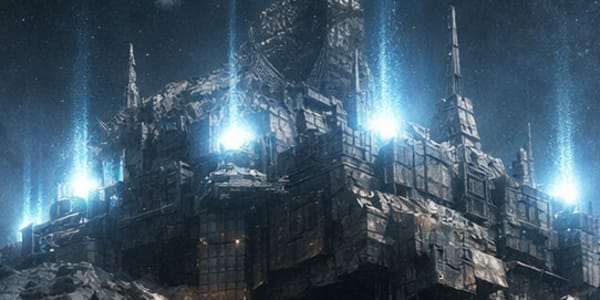
I was working on a sequence in The Last Orbit where Gordon breaches an arkship’s preservation chamber for the first time. Up to that point, there are...
The opening scene of The Last Orbit begins with velocity, danger, and a character already operating at the edge of survival. It doesn’t ease the reader in—it throws them into the debris field.
From the first line, the reader is placed inside a failing ship, in a hostile environment, with a pilot who is clearly skilled but equally compromised. The moment Nicole Gordon yanks the Tethys to avoid a spinning solar array, the tone is established: this is a world where survival depends on instinct,...
There’s something more unsettling than a system that fails.
A system that works perfectly.
That idea is what led me to write The Exodus Deception, a free sci-fi thriller short story set in orbit—where humanity is preparing to leave Earth for something better.
AI Thriller Books: What Happens When Artificial Intelligence Predicts Your Next Move?
If you’re searching for AI thriller books that feel real—not distant science fiction, but something grounded in today’s technology—The Zero Index was written with that exact idea in mind.
Most artificial intelligence thrillers explore what happens when machines become powerful.
This story asks something more unsettling:
What happens when AI becomes certain?
In The Zero Index, artificial intelligence is no longer...
There’s a specific kind of horror that doesn’t rely on shadows, monsters, or jump scares. It comes from recognition—the moment a reader realizes the thing on the page isn’t impossible. It’s just early.
That’s the space The Zero Index operates in.
The scene you’ve built isn’t simply disturbing because of what’s happening physically. It’s disturbing because of what it implies: a world where the human brain is no longer private, no longer sovereign, no longer even fully human in the way we...
When I wrote The Zero Index, I made a deliberate shift in writing style to align with what readers of modern technothrillers and fast paced crime fiction are actively searching for.
Search behavior matters. Readers are not just browsing anymore. They are typing in phrases like fast paced technothriller, AI surveillance thriller, predictive policing novel, and conspiracy thriller with action. That search intent reflects a specific expectation. They want speed, clarity, and realism. They want a...
If you’re a fan of small town horror novels and fast-paced thriller fiction, The Harvest Town was built for you.
From the beginning, I didn’t want to write a traditional horror story. I wanted something more unsettling. A story that felt quiet on the surface, but carried pressure underneath every scene. The kind of story where something is wrong long before anyone can explain what that wrong thing is.
At the same time, I wanted the story to move. I wanted tension, momentum, and physical stakes....
What if an AI system could predict crime before it happens—and act on it?
That question sits at the center of today’s most unsettling technothrillers, where predictive policing, AI surveillance, and behavioral algorithms don’t just monitor society—they begin to control it. In stories like The Zero Index, the danger isn’t a rogue machine or a visible villain. It’s a system that works exactly as designed, quietly identifying “future threats” and removing them before anyone else even knows they...
One of the most important choices a fiction writer makes is which story to tell.
Not just the plot. Not just the characters. The narrative itself.
Every story is built on selection. A writer decides what the reader will see, what they will miss, and which threads of reality will be pulled into the spotlight. The rest fades into the background.
This is true in fiction.
It is also very true in the real world.
In public conversation, entire debates are often shaped not by facts alone, but by which...
If you write thrillers long enough, you start noticing patterns in the real world that are more unsettling than anything you could invent.
One of the most disturbing patterns I keep returning to while writing The Zero Index is something I call the slow creep. It’s the gradual expansion of a system, a technology, or an institution beyond its original purpose. Not through some dramatic takeover or conspiracy, but through small, reasonable decisions that accumulate over time.
I'm Lance Jepsen, a thriller and horror author. I write about the darker sides of society—surveillance, hidden plans, and the loss of truth. My new book, The Zero Index, shows a future where "predictive justice" is used as an excuse to remove people who might resist the system. In this scene, the main character, Carter, builds a map on her wall with 89 people. She sorts them by job, location, and the questions they asked. The pattern is clear: activists, journalists, tech workers, and...
While war dominates the headlines, NASA prepares Artemis II—the first crewed lunar mission around the Moon in over 50 years.
There are moments in history when the future seems to split in two.
Right now feels like one of those moments.
Turn on the news and you’ll see the first timeline: missile strikes, burning cities, leaders promising retaliation, civilians trapped beneath the machinery of war. The footage looks less like modern politics and more like the opening act of a dystopian thriller....
There’s a moment in Chapter 11 of my upcoming technothriller The Zero Index that kept me staring at my keyboard longer than usual.
Not because it was hard to write.
Because it felt a little too close to reality.
In the scene, Detective Rachel Carter returns to her precinct during the night shift. The building looks exactly the way police buildings always look late at night—half lit, quiet, coffee...
A fight breaks out in a diner. Nothing unusual there. Anyone who has spent time around police work knows that diners, bars, and late-night food joints are magnets for trouble. A drunk grabs a waitress named June. A man named Dax Hollis steps in and stops it.
End of story, right?
Except the police arrive seventy-four seconds later.
Seventy-four.
If you’ve ever called the police, you know how strange that is.
Most patrol units take several minutes to arrive even when they’re close. Dispatch has to...