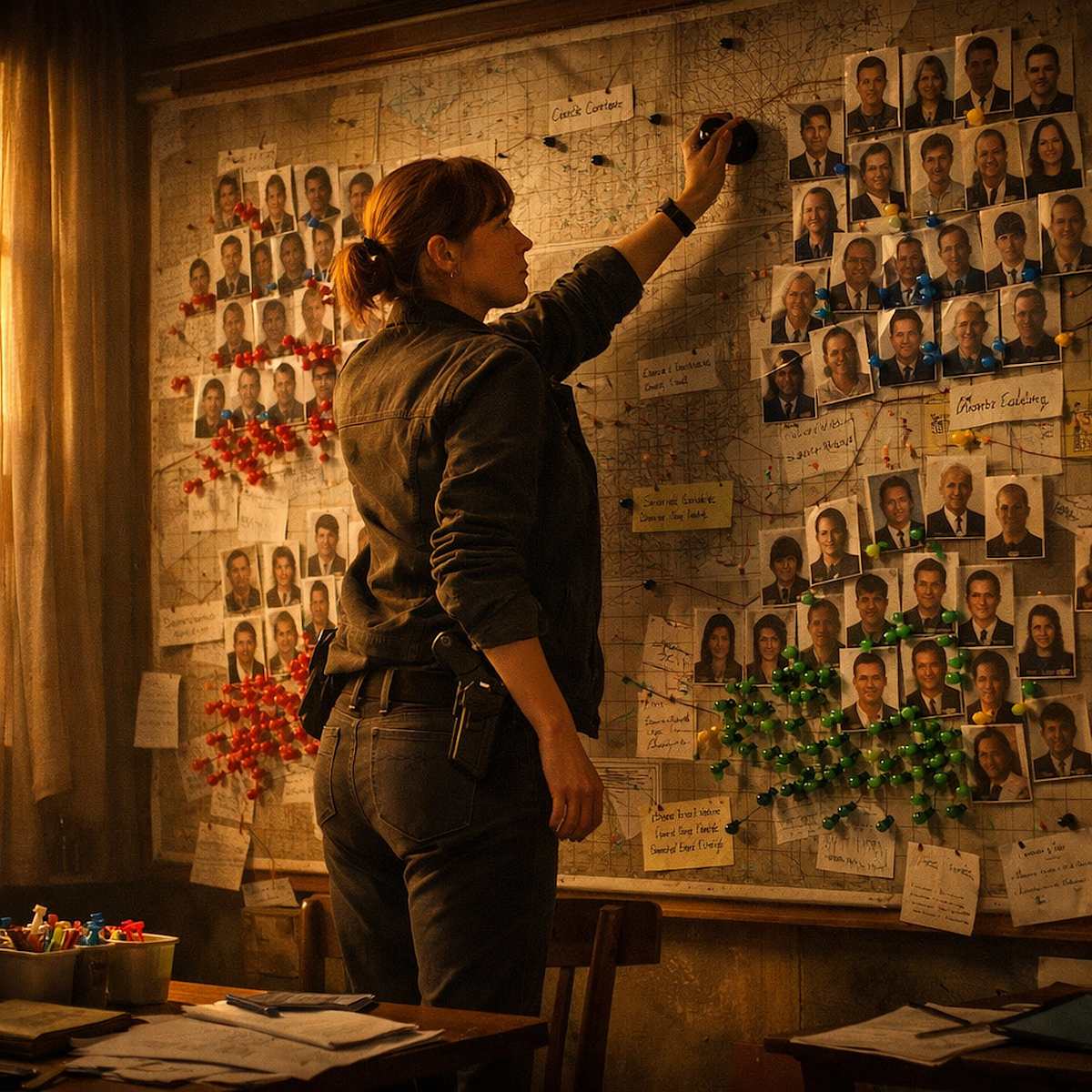
I'm Lance Jepsen, a thriller and horror author. I write about the darker sides of society—surveillance, hidden plans, and the loss of truth. My new book, The Zero Index, shows a future where "predictive justice" is used as an excuse to remove people who might resist the system. In this scene, the main character, Carter, builds a map on her wall with 89 people. She sorts them by job, location, and the questions they asked. The pattern is clear: activists, journalists, tech workers, and whistleblowers are grouped near centers of power.
This moment shows the fear of discovering that systems meant to protect us are being used to control and silence people. While writing this, real events felt very similar. How often does this kind of suppression happen in history and today? Here are some connections to The Zero Index.
Themes of Suppression in The Zero Index
The story is about hidden power that finds and removes threats, calling it justice. Carter’s map shows it is deliberate—people are targeted based on their job and what they ask about. This is similar to how some governments and organizations identify and stop resistance. It reflects real concerns in a world with advanced technology and strong control. In the book, programs identify "potential opposition" and eliminate them. This connects to current worries about tracking, where data on where people go, what they do, and what they ask can be used against them.
Comparison to Huxley's Brave New World
Aldous Huxley’s Brave New World shows a society where people are divided into groups from birth, trained to accept their roles, and kept calm with a drug called soma. Freedom is traded for stability, and individuality is lost in fake happiness and distractions.
The Zero Index takes this idea further with prediction and removal. In Huxley’s world, problems are prevented through science and early training. In my story, the system uses data and programs to predict trouble and remove it early. Carter’s wall is similar to the way Huxley’s society sorts people by role and manages them. In Brave New World, people who don’t fit are sent away or changed. In The Zero Index, they disappear under the name of justice. Their questions about water, surveillance, or data are like the thoughts that break the calm in Huxley’s world.
The main danger is how quiet the control is. Huxley uses a drug to hide the loss of freedom; in my book, the promise of safety hides the removal of threats. Both stories warn about a future where technology and power work together to limit free will.
Comparison to Orwell's 1984
The Zero Index also connects to George Orwell’s 1984, a story of total surveillance and control over truth. In 1984, Big Brother watches everyone, spreads lies, and punishes wrong thoughts. History is changed, words are limited, and constant war keeps people loyal. In The Zero Index, the shadow system adds prediction to surveillance. It doesn’t just watch—it uses data on locations, jobs, and questions to guess future problems and remove them. Carter’s wall tracks the removed people, like a record of erased threats. In 1984, people are broken and reprogrammed. In my story, threats are stopped before they grow. Questions about surveillance or data are treated like dangerous ideas. The groups on the wall are like areas under constant watch, with no safe place.
The worst part is the loss of truth. In 1984, people are forced to accept contradictions. In The Zero Index, the system sells protection while removing people, making society accept it. Controlling information controls what happens next.
Real-World Examples of Suppression
History shows many cases of powerful groups removing opposition to stay in control. Some operations targeted people who appeared to be civil rights activists but were actually supported by wealthy interests to carry out their plans through surveillance and pressure. These efforts created patterns of control similar to Carter’s wall, where the goal was to mislead and manage public attention. Today, some governments suppress dissent by imprisoning or removing critics and labeling resistance as dangerous. These systems reach across borders to silence people far away. Full control often uses punishment to force obedience, and planned actions are used to stop large protests.
These are not single events—they form repeating patterns. Control creates fear and reaction. Even in places that claim to be free, outside forces target people and ignore boundaries.
Fictional Scenario: Election Fraud and Digital Manipulation
In the world of The Zero Index, elections are another tool for the elite to maintain control. Imagine a system where votes are cast digitally, stored on servers that seem secure but are designed with hidden backdoors. The rich and powerful, who fund the technology companies building these systems, have access to those backdoors. They can alter vote counts in small, undetectable ways—flipping a few thousand votes in key areas without leaving a trace. In this fictional setup, algorithms similar to the ones in Meridian's shadow system predict voting patterns based on data from social media, location tracking, and past behavior. If the results don't favor the elite's chosen candidates, the system quietly adjusts the numbers.
Whistleblowers who notice irregularities—perhaps a tech worker spotting unusual server activity or a journalist questioning mismatched poll data—are flagged as "potential opposition" and removed, just like the faces on Carter's wall. This keeps the illusion of democracy alive while ensuring the powerful stay in charge. It's a chilling extension of the book's themes, showing how technology can turn free choice into a controlled outcome.
The Jeffrey Epstein Case
The case of Jeffrey Epstein raises serious questions. His death was called a suicide, but his connections to powerful people led many to believe it was arranged to prevent secrets from coming out.
Many believe he was silenced to protect others. The phrase "Epstein didn't kill himself" became common because of widespread doubt. Released documents keep these questions alive. It matches the theme in The Zero Index of removing risks to protect those in power.
Why Stories Like This Matter
The Zero Index is more than a thriller. It is a warning, like Brave New World and 1984. With AI surveillance and growing control, we need to question systems that claim to predict or protect. Real suppression exists in history and today, elections and cases like Epstein show why we must demand transparency. As the world faces more tension, these stories can start conversations.