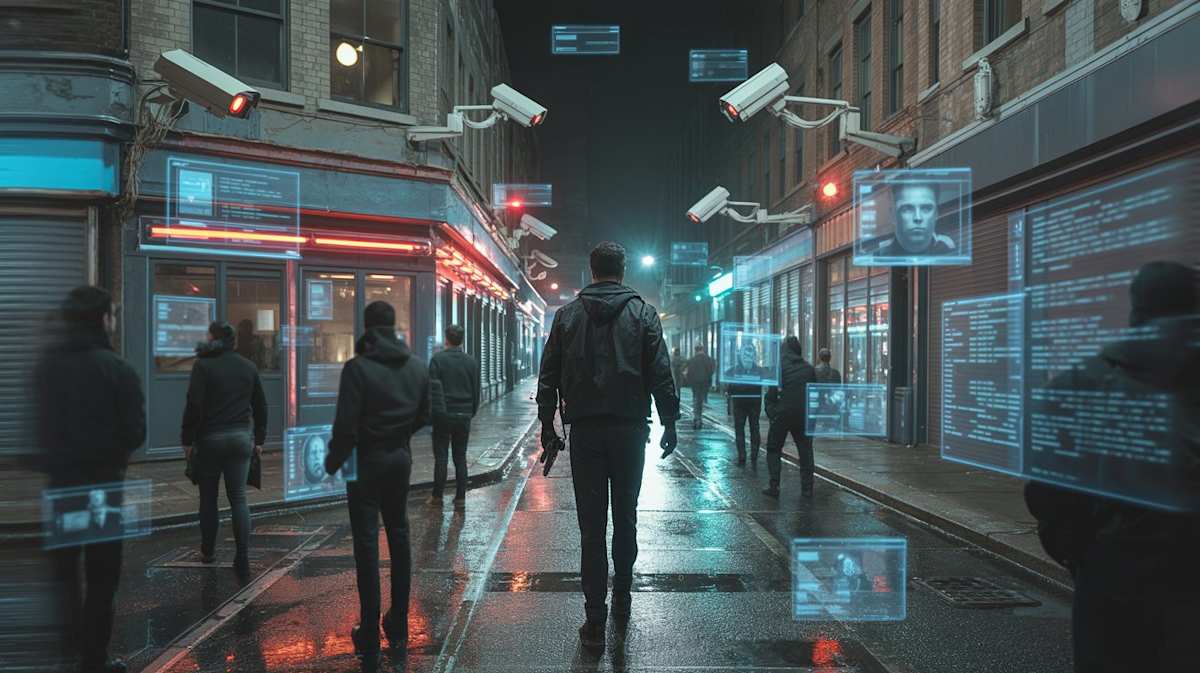
When I wrote The Zero Index, I made a deliberate shift in writing style to align with what readers of modern technothrillers and fast paced crime fiction are actively searching for.
Search behavior matters. Readers are not just browsing anymore. They are typing in phrases like fast paced technothriller, AI surveillance thriller, predictive policing novel, and conspiracy thriller with action. That search intent reflects a specific expectation. They want speed, clarity, and realism. They want a story that feels like it could already exist just beneath the surface of the world they live in.
My earlier books lean more toward psychological suspense and atmospheric horror. Those stories use layered description, metaphor, and slower pacing to build unease. That approach is closer to the influence of Stephen King, where the environment and the inner life of the character carry much of the tension.
The Zero Index required a different architecture.
This story operates inside systems. It deals with predictive models, data aggregation, and automated decision frameworks. The prose needed to reflect that structure. I shifted toward a clear and controlled style inspired by Lee Child and Don Winslow, where sentences are tight, paragraphs are efficient, and every action has a visible cause and effect.
At a technical level, that meant restructuring how scenes are built.
Each scene is driven by input, processing, and outcome.
The character receives information through observation. This might be visual data, behavioral anomalies, or system responses that do not align with expectations. The character processes that information based on training and experience. Then they act. That action produces a consequence that either resolves the immediate problem or escalates it.
This mirrors how real world systems operate.
Modern AI driven systems, including predictive policing models and behavioral analytics platforms, rely on continuous input streams. They evaluate patterns, assign risk scores, and trigger actions. In The Zero Index, I wanted the narrative itself to feel like it was moving through a similar loop. Observation leads to interpretation. Interpretation leads to action. Action leads to consequence.
This is why the prose avoids over explanation.
Readers searching for AI conspiracy thrillers or surveillance based fiction are already familiar with the general concepts. What they are looking for is execution. They want to see how those systems behave in motion. They want to experience what it feels like when a system flags the wrong person, or when a record exists that should not exist.
Instead of explaining the system, I let it reveal itself through failure points.
A delayed response time.
A mismatch in identity records.
A behavioral flag that escalates too quickly.
These are the narrative equivalents of system anomalies. They create tension because they suggest something larger is happening without fully defining it.
From a pacing perspective, this approach keeps the story aligned with what readers expect when they search for fast paced thrillers or high tension suspense novels. There are no long pauses for exposition. The reader stays inside the moment with the character, making decisions in real time.
Writing this way requires discipline at the sentence level.
Every line must do one of three things. Advance the action, reveal new information, or increase pressure. If a sentence does not serve one of those functions, it is removed. This creates a cleaner reading experience and allows tension to build naturally.
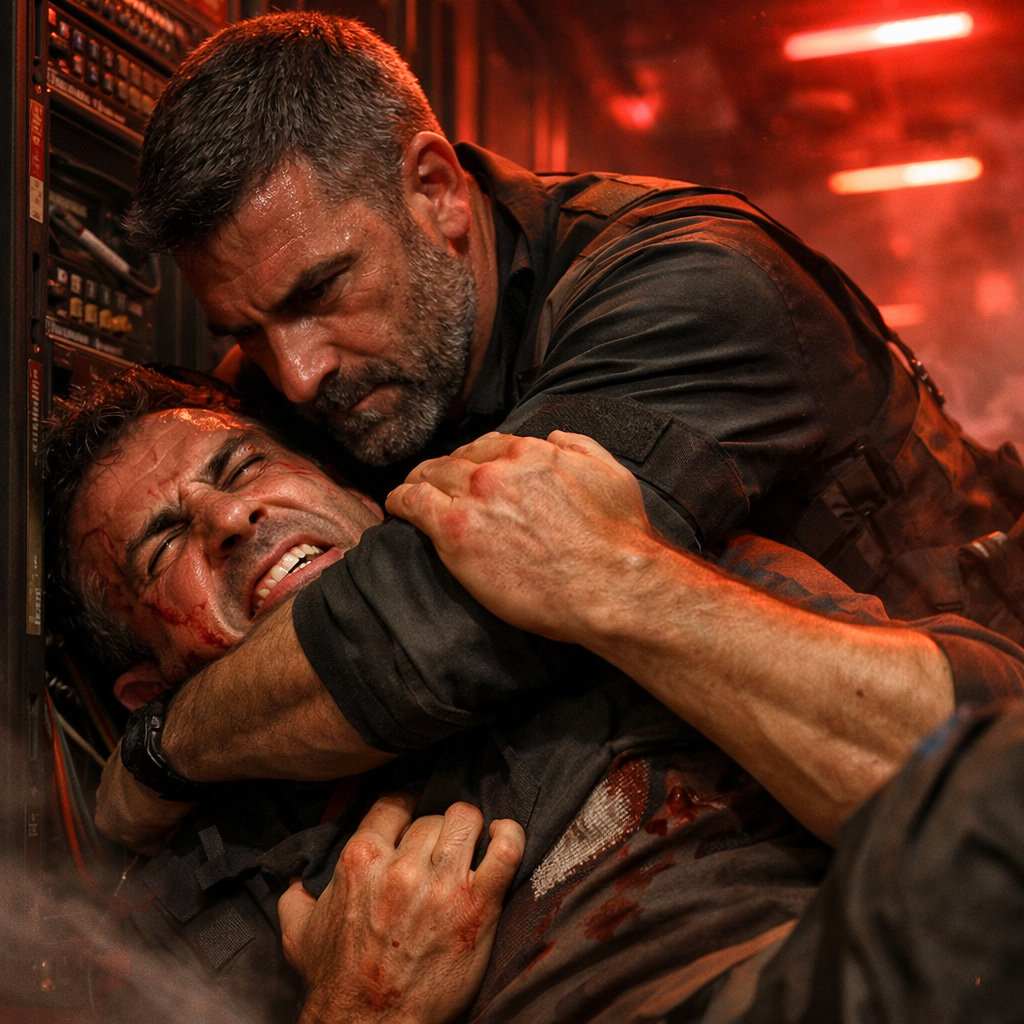
( Image: Crowe and Hollis face off during a critical confrontation in The Zero Index )
One of the most interesting outcomes of this style is how it amplifies disruption.
Because the baseline prose is controlled and grounded, any deviation becomes immediately visible. When a system behaves unpredictably, or when a character encounters something that breaks the expected pattern, it lands harder. The reader feels it because the rest of the narrative has trained them to expect consistency.
For readers searching for a fast paced technothriller, an AI surveillance novel, or a conspiracy driven crime story in the style of Lee Child and Don Winslow, The Zero Index was written to meet those expectations at both a narrative and structural level.
It is not just a change in voice. It is a change in how the story is engineered.
Clarity becomes tension.
And tension is what keeps readers turning pages.
If you want to experience this world before the full novel releases, you can download the free short story prequel The Last Day of Harmony. It introduces the early stage of the system and the first signs that something is beginning to move beneath the surface.
Download The Last Day of Harmony and join my email list to be notified the moment The Zero Index is released.
FAQ
What kind of book is The Zero Index
The Zero Index is a fast paced technothriller focused on AI surveillance, predictive systems, and conspiracy driven decision making. It combines elements of crime thriller, action thriller, and technology based suspense.
Is The Zero Index similar to Jack Reacher or Lee Child books
Yes. The prose style is influenced by Lee Child with a focus on clear, direct action and tight pacing. It also incorporates the systemic tension and layered stakes found in modern conspiracy thrillers.
Does the book explain how AI and predictive systems work
The book does not rely on heavy technical explanation. Instead, it shows how these systems behave through action and consequence, allowing readers to understand the implications through the story itself.
Is this book realistic
The concepts in The Zero Index are grounded in real world developments in AI, data analysis, and predictive modeling. The story builds on these foundations to explore how such systems could evolve.
Do I need to read the prequel The Last Day of Harmony first
No, the novel stands on its own. However, the prequel provides additional context and introduces early elements of the system, making the experience richer.
When will The Zero Index be released
The Zero Index is scheduled for release before May 2026. Joining the email list through the free prequel ensures you receive updates and release notifications.