There’s a moment in Halloween II that does something most horror films never pull off.
It doesn’t just scare you.
It reframes the entire story in a way that makes the fear feel older than the movie itself.
The scene with Dr. Loomis in the car, isn’t loud. There’s no jump scare. No music spike trying to yank a reaction out of the audience.
It’s quiet.
And that’s exactly why it works. Here is the Halloween II (1981) scene.
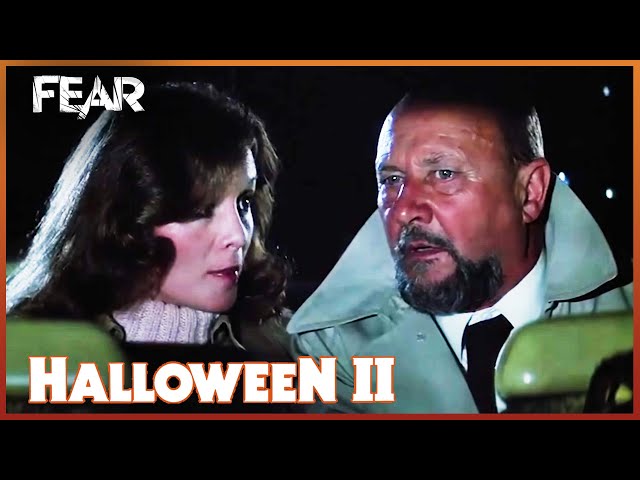

At first glance, it’s just exposition. A conversation. Background information being filled in.
But listen closely to what’s actually happening.
They’re not explaining Michael Myers.
They’re failing to explain him.
The Druid ritual imagery. The idea of sacrifice. The suggestion that violence isn’t random but part of something ancient and cyclical.
Then the line lands: “We’re all afraid of the dark inside ourselves.”
That’s the pivot.
The fear moves from external to internal.
Michael stops being just a killer and becomes a mirror.
That’s the real horror of the scene. Not what he is, but what he represents.
Technique 1: Mythologizing Without Explaining
Most stories make a mistake here. They over-explain.
This scene does the opposite.
It introduces mythology without confirming it.
Are the Druids relevant? Maybe.
Is any of this provable? No.
That uncertainty is doing the work.
When you give the audience something they can’t fully verify, their brain keeps chewing on it. The fear lingers because it never resolves.
Writers can use this immediately: Don’t answer the question. Complicate it.
If your villain becomes fully understood, they shrink.
Michael Myers never shrinks because he’s never fully pinned down.
Technique 2: Reframing the Threat Mid-Story
Up to this point, Michael is already terrifying.
He’s been shot. He keeps moving. He’s relentless.
But this scene upgrades him.
Now he’s not just a man who kills.
He’s a pattern.
A recurrence.
A force that returns.
That shift matters because it changes how the audience processes every future scene. It’s no longer “will he stop?”
It’s “can he ever stop?”
That’s a much worse question.
If you’re writing thrillers or horror, this is a powerful move: Take an existing threat and redefine it halfway through.
Same character. Higher stakes. Deeper implication.
Technique 3: The Power of Institutional Failure
Notice the tension layered under the conversation.
Orders from the governor.
Sealed files.
Information withheld.
Loomis trying to act while the system slows him down.
This isn’t just background. It’s pressure.
The people who should understand the threat don’t.
The systems designed to contain it can’t.
That creates a specific kind of fear: not just that something bad exists, but that nothing is equipped to deal with it.
For writers, this is gold.
Competent systems failing is far scarier than incompetent ones.
If everything is broken from the start, it’s expected.
If things should work and still don’t, that’s when it gets unsettling.
Technique 4: Urgency Without Action
This entire scene is built on urgency.
But nobody is running. Nobody is fighting.
They’re talking in a car.
And yet it feels like time is running out.
Why?
Because the stakes are moving faster than the characters.
The audience knows something the characters don’t fully grasp yet. Every second of delay feels dangerous.
That’s a reminder for writers: You don’t need action to create tension. You need momentum. If the consequences are advancing, the scene will feel alive even if everyone is sitting still.
Technique 5: Horror as Recognition, Not Surprise
There’s no twist here.
No sudden reveal that flips the story.
Instead, it deepens what you already suspected.
Michael isn’t normal.
He isn’t explainable.
He isn’t going to stop.
Good horror often works this way. It doesn’t shock you with something new.
It confirms something you were already afraid might be true.
That’s why it sticks.
Why This Scene Still Works
What makes this moment so effective isn’t just the writing. It’s what the writing refuses to do.
It doesn’t define Michael Myers.
It surrounds him with ideas he doesn’t quite fit into.
Myth. Psychology. Institutional secrecy. Fate.
He exists in the gaps between those explanations.
And that’s where he becomes frightening.
Because gaps are where the audience projects their own fear.
What Writers Should Take From This
If you’re writing thrillers, horror, or anything that leans on tension, this scene is a blueprint.
Not for copying content, but for understanding control.
Control of information.
Control of pacing.
Control of what is said, and what is left unsaid.
The instinct is always to clarify.
This scene proves the opposite.
The more precise you are about what matters, the more room you leave for what doesn’t.
And sometimes, what you don’t explain is the thing that keeps people up at night.