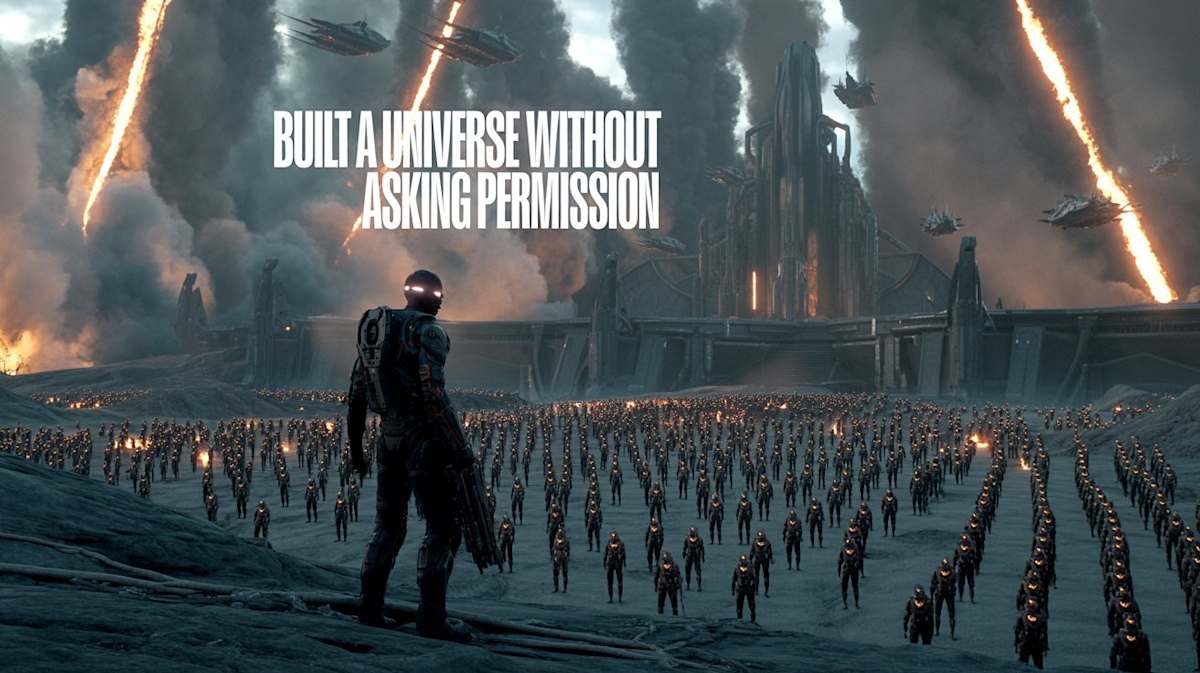
There’s a certain kind of science fiction that doesn’t ask for permission. It doesn’t ease you in with careful exposition or tidy moral framing. It drops you into a hostile universe, lets you feel the weight of it, and trusts you to keep up.
That’s exactly what The Chronicles of Riddick does.
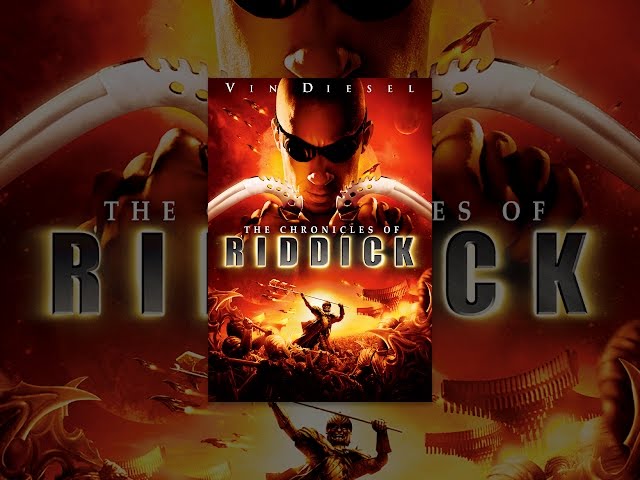
Released in 2004 and directed by David Twohy, it’s often remembered as the strange, ambitious sequel to Pitch Black. But that undersells it. This isn’t just a sequel. It’s a full-scale expansion into myth, religion, empire, and identity, all wrapped in a brutal, unapologetic sci-fi shell. Here is the full movie you can watch now.

A Universe That Feels Older Than the Story
One of the most effective writing devices in The Chronicles of Riddick is implied depth.
The film never stops to explain everything. It references entire belief systems, wars, bloodlines, and prophecies as if they’ve existed long before the camera showed up.
The Necromongers don’t feel like villains invented for a plot. They feel like the latest wave of something ancient and unstoppable.
That’s not accidental.
This is a classic use of what you might call mythic scaffolding:
- Cultures have rules, rituals, and language before you understand them
- Characters speak as if history matters, even when the audience doesn’t know it yet
- The world extends beyond the edges of the story
Writers can learn a lot from this. You don’t need to explain everything. In fact, over-explaining weakens immersion. Let the audience feel like they’re catching up to a world that doesn’t care if they understand it yet.
That tension pulls them deeper.
The Anti-Hero as a Fixed Point
At the center of all that chaos is Richard B. Riddick, played by Vin Diesel.
And here’s where the film does something smart that a lot of modern stories get wrong: Riddick does not change to fit the world. The world changes around him.
This is a fixed-character design, similar to characters like Jack Reacher. Riddick isn’t on a journey to become something else. He already is what he is. The tension comes from watching systems, empires, and belief structures try, and fail, to contain him.
That creates a different kind of narrative engine:
- Instead of “Will the hero grow?” the question becomes “What breaks when the hero enters the system?”
- Conflict becomes environmental and ideological, not internal
- The character feels mythic because they resist change
For thriller and sci-fi writers, this is powerful. Not every protagonist needs an arc of transformation. Sometimes the story is about impact, not evolution.
The Villain as a Belief System
The Necromongers—and especially the Lord Marshal—aren’t just antagonists.
They’re ideology.
“Keep what you kill” isn’t just a cool line. It’s a governing law. A worldview. A system that defines power, loyalty, and survival.
This is a critical writing lesson: The best villains don’t just oppose the hero physically. They oppose the meaning of the world.
In The Chronicles of Riddick:
- The Necromongers believe death is transcendence
- Conversion is framed as salvation
- Individual identity is disposable
Riddick, by contrast, is raw survival. Instinct. Self-contained will.
That clash creates thematic weight without long speeches. You feel the conflict because the rules of existence are incompatible.
When readers or viewers say they “like” a story like this, what they often mean is they can feel the underlying structure.
Controlled Exposition Through Movement
One of the more subtle techniques the film uses is action-driven exposition.
Instead of stopping to explain:
- We learn about Crematoria by watching people burn trying to escape it
- We understand Necromonger hierarchy by seeing how quickly leadership changes through violence
- We grasp prophecy through reaction, not lectures
This is especially relevant if you’re writing fast-paced fiction.
Information lands harder when it’s tied to consequence.
If a rule matters, show what happens when someone breaks it.
Scale Without Losing Focus
The film jumps from prison survival to planetary invasion to cosmic prophecy.
That kind of scale usually collapses under its own weight.
But here’s why it works: Everything is still anchored to Riddick’s perspective.
Even when the stakes become galactic, the story stays grounded in:
- Physical survival
- Immediate threats
- Clear objectives
This is a key structural takeaway: You can go big, as long as the character’s experience stays small and tangible.
Readers don’t connect to galaxies. They connect to pressure, danger, and choice in the moment.
Why People Keep Coming Back to It
The Chronicles of Riddick didn’t follow the safe path. It expanded instead of repeating. It got weirder, bigger, more mythological.
And that’s exactly why it stuck.
People respond to:
- Worlds that feel dangerous and lived-in
- Characters who don’t apologize for what they are
- Stories that trust the audience to keep up
It’s not polished in the way modern franchise films are. It’s rough in places. Uneven. But that roughness gives it texture.
It feels like a world that wasn’t designed for you.
You’re just surviving inside it.
What Writers Should Take From It
If you’re writing science fiction or thrillers, there’s a lot here worth stealing:
- Build worlds that extend beyond the page
- Let characters reveal the rules through action
- Design villains as systems, not just individuals
- Don’t over explain, create pressure and let readers infer
- Decide whether your protagonist changes or changes everything around them
Most importantly: Trust the audience.
Because when a story respects their intelligence, they lean in harder. They engage. They remember.
That’s what The Chronicles of Riddick does.
And that’s why, more than twenty years later, people still hit play.