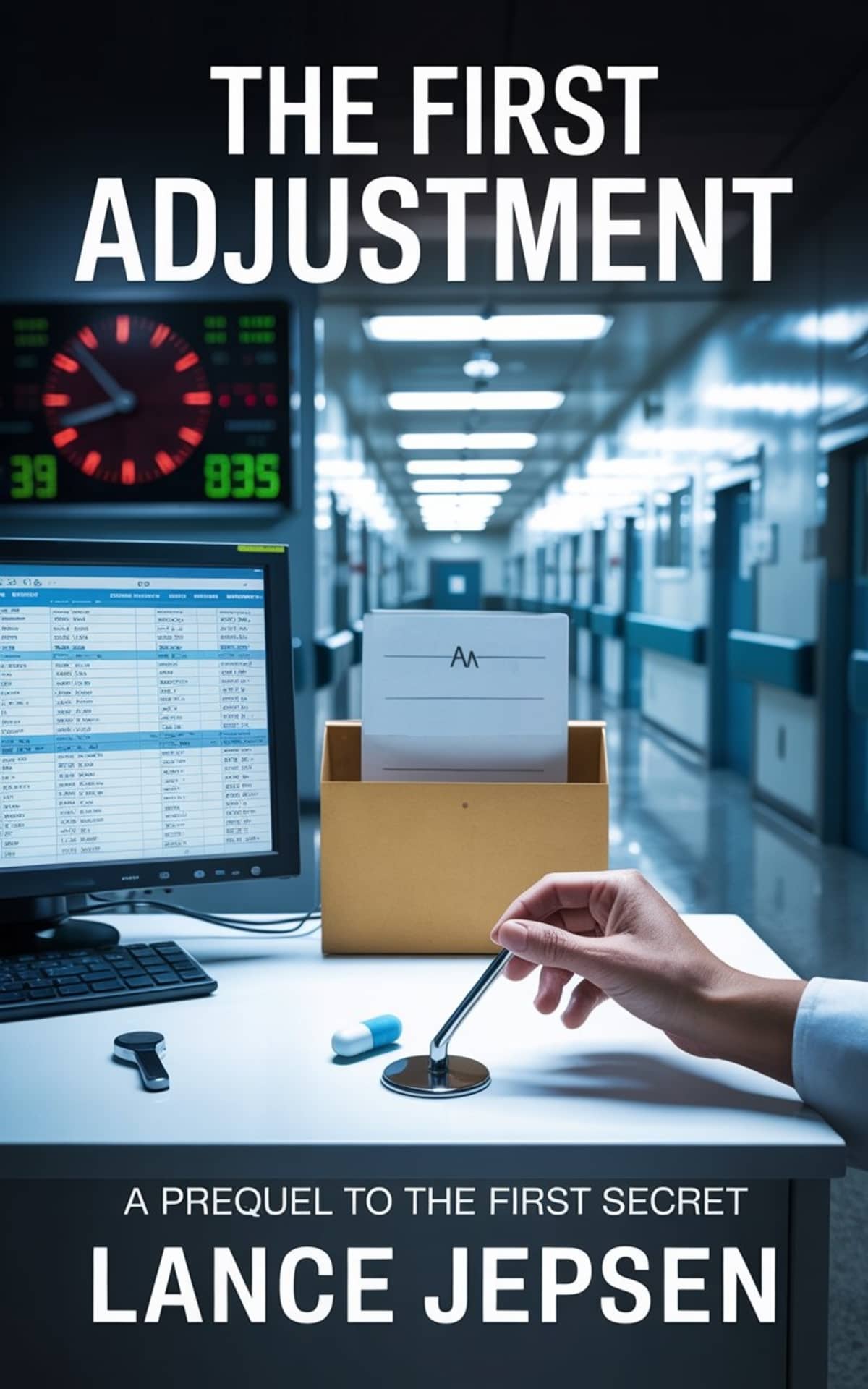
Hospitals don’t feel like crime scenes.
They smell like antiseptic.
They glow under fluorescent light.
They hum.
If you listen closely, though, the hum isn’t coming from the machines.
It’s coming from the decisions.
Tess Hartwell understands decisions. She works in compliance — that quiet corner of the world where signatures matter more than voices and timestamps outlive memory. She can read a spreadsheet like some people read confessionals. Patterns don’t lie. People do.
When the intake software at Memorial freezes on contested spousal claims, it doesn’t look like evil.
It looks like inefficiency.
An estranged husband arguing in the waiting room.
A wife insisting she’s still legally married.
A patient unconscious behind double doors.
A blinking cursor that refuses to resolve the conflict.
Care stalls.
Beds fill.
The emergency department tightens.
So Tess makes an adjustment.
Provisional authorization.
Not a loophole. Not a fraud. A bridge.
Routine care moves forward while verification runs in parallel. Treatment now. Confirmation later. It feels reasonable. Humane, even.
The metrics respond immediately. Delays shrink. Throughput stabilizes. The waiting room thins. The system breathes.
And the system learns.
The cursor hesitates less.
Duplicate charts overlay into a single composite truth.
Conditional confirmations stop feeling conditional.
The pause — that tiny space where a human might reconsider — begins to disappear.
Efficiency has a shape.
It smooths edges.
It removes friction.
But friction is where doubt lives.
And doubt is where consent hides.
Then someone notices.
An estranged spouse stands in a corridor under fluorescent light and discovers their partner was treated under another’s provisional consent. The documentation is immaculate. The authorization chain is defensible. The architecture performed exactly as designed.
No alarms sounded.
No laws were broken.
No one meant harm.
That’s the part that keeps Tess awake.
Not guilt.
Recognition.
The architecture she calibrated so carefully is not neutral. It encodes belief. It decides which hesitation matters and which can be absorbed. It redistributes risk the way a river redistributes sediment — invisibly, until the shoreline is gone.
Provisional becomes precedent.
Precedent becomes doctrine.
And doctrine doesn’t ask questions.
It logs them.
The First Adjustment is the moment before everything locks in. Before the doctrine has a name. Before anyone understands that the system is not misbehaving.
It is aligning.
There are no monsters in this story.
Only clean interfaces.
Verified fields.
Green confirmations.
And a single decision that will replicate perfectly.
You can download The First Adjustment free here:
👉 https://books.plot-studios.com/the-first-adjustment-lance-jepsen
Be careful what you optimize.
Some adjustments don’t reverse.