They told us the planet was dying, and for once, they weren’t wrong.
You could see it in the sky first. Not in some poetic, end-of-days way. No crimson sunsets or cinematic storms. Just a slow corruption of patterns that had held steady for millennia. Seasons slipping their schedule. Heat arriving early and overstaying its welcome. Storm systems growing teeth where they used to have edges. The kind of change that doesn’t announce itself. The kind that just keeps tightening until something breaks.
The broadcasts called it terminal.
Panels of experts with clean hands and careful voices explained that Earth had crossed thresholds we didn’t understand until it was too late. Pollution saturation. Population density beyond sustainable correction. Feedback loops accelerating past intervention.
They said the planet was dying.
Then they offered a miracle.
They called it New Earth.
A world a hundred years out, reachable only by arkship. Untouched. Uninhabited. A perfect mirror of what we’d lost, before we poisoned it. Oceans that hadn’t been strip-mined. Air that didn’t taste like metal. Land that didn’t come with ownership disputes and buried toxins.
A reset.
You paid the corporation, you boarded the ark, and they put you under. Cryostasis. Clean, clinical, dignified. You’d sleep through the century-long journey, and when you woke up, it would all be waiting. Fresh air. Open land. Your family stepping out beside you like you’d all just taken the same long breath.
A second chance, packaged and sold.
People didn’t hesitate. Not really. Fear compresses decision-making. You could see it in the lines that wrapped city blocks. People clutching contracts they didn’t read. Selling everything that still had value. Liquidating lives for a ticket off a sinking world.
The corporations didn’t rush them. They didn’t need to.
Hope does the heavy lifting.
The arkships launched in waves. Massive things, all smooth hulls and quiet engines, disappearing into the upper atmosphere like promises you couldn’t quite hold onto. Each one carrying thousands. Families. Workers. Entire fragments of cities, folded up and stored in cryo ponds like inventory.
Three thousand souls per ship.
Give or take.
And then the broadcasts shifted. Less urgency. Less panic. The narrative stabilized. We were saving ourselves, after all. The lucky ones were already on their way. The rest just had to wait their turn.
That was the surface story.
The one they fed us.
Out here, though, stories don’t hold up well.
Not in the dark between things.
Because space has a way of keeping what doesn’t fit. Dead satellites that should’ve burned up years ago. Stations everyone forgot to decommission. Fragments of decisions that were supposed to stay buried.
Most salvage techs learn to ignore that.
Nicole Gordon didn’t.
She makes a living picking through the bones of failed infrastructure. Old satellites. Derelict stations. Anything with enough value left in it to justify the risk of going out there alone. You develop instincts doing that work. You learn the difference between drift and intention. Between debris and design.
She wasn’t looking for an arkship.
Nobody does.
But drift patterns change. Debris fields overlap. And sometimes something big crosses your path, silent and unlit, too massive to be anything natural.
She matched velocity out of habit. Ran a passive scan. Expected scrap.
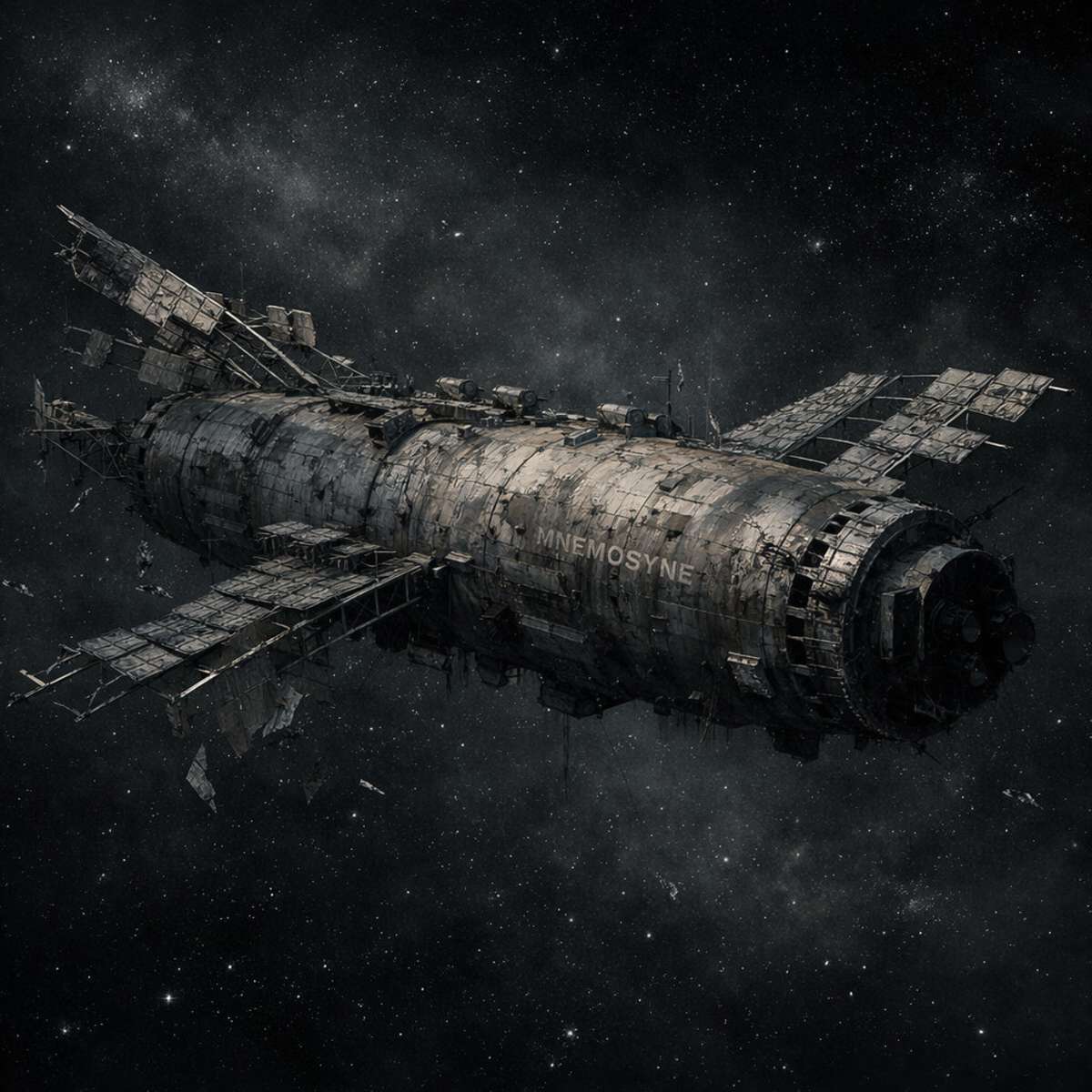
What she found was a ship that wasn’t supposed to exist anymore.
Hull intact.
Cold.
Waiting.
Nicole cut her engines and let the void carry her closer, staring at something that didn’t belong in any version of the story she’d been told.
Because if the arkships were doing exactly what they were supposed to…
Then this one shouldn’t be here.
And whatever was inside it—
was never meant to be found.
The Last Orbit (April 2026 release).
Download the free short-story prequel The Exodus Deception now: https://books.plot-studios.com/the-exodus-deception