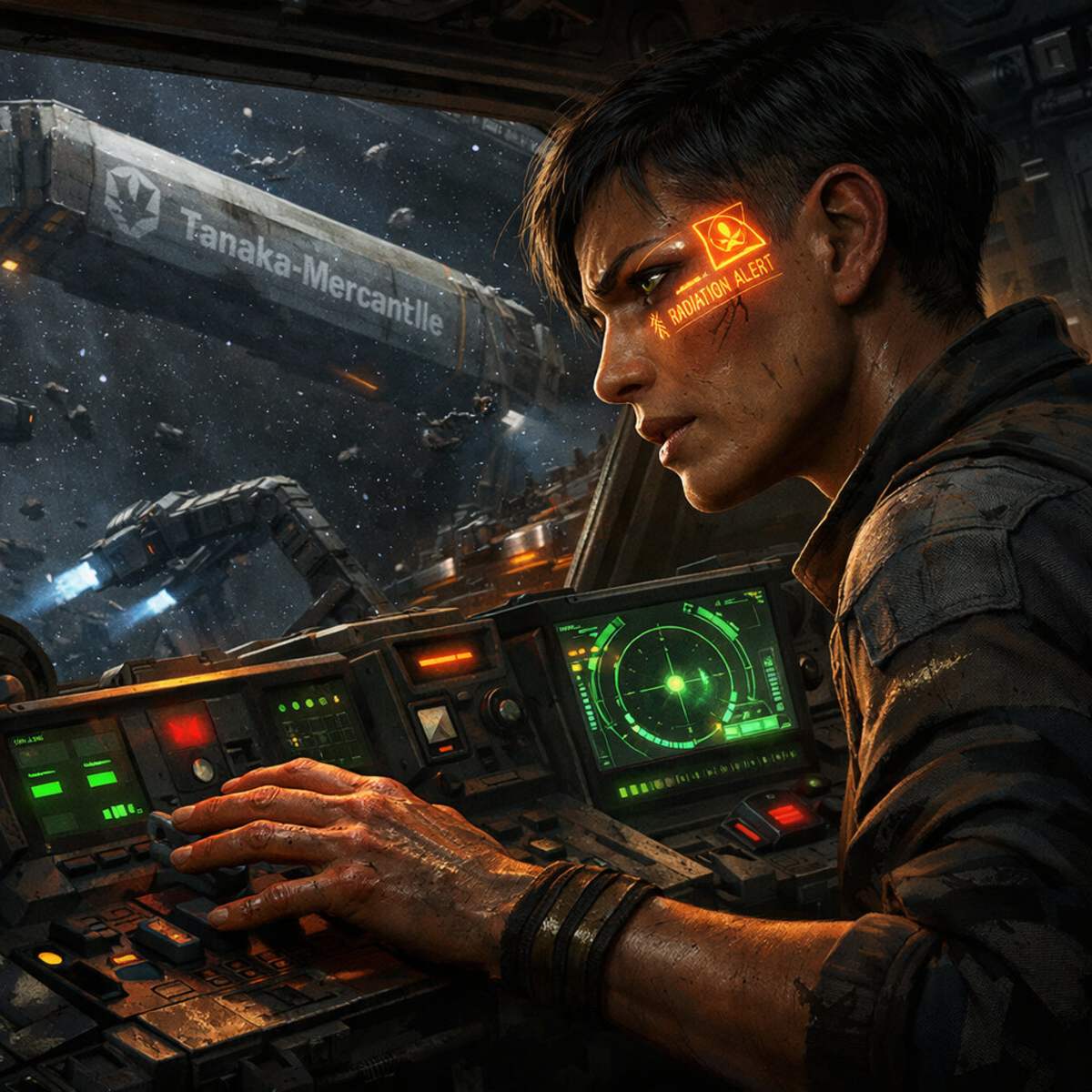
The opening scene of The Last Orbit begins with velocity, danger, and a character already operating at the edge of survival. It doesn’t ease the reader in—it throws them into the debris field.
From the first line, the reader is placed inside a failing ship, in a hostile environment, with a pilot who is clearly skilled but equally compromised. The moment Nicole Gordon yanks the Tethys to avoid a spinning solar array, the tone is established: this is a world where survival depends on instinct, not systems, and where technology fails just often enough to get people killed.
This kind of opening is intentional. For readers searching for science fiction thrillers, space survival stories, or technothrillers with strong character immersion, the goal is immediate engagement. There’s no exposition about the world. Instead, the world reveals itself through pressure.
The Graveyard Orbit itself functions as more than a setting. It’s a character. A trillion-dollar junkyard where corporate history has been abandoned, where only salvagers like Gordon operate, and where risk is calculated in oxygen minutes and radiation exposure.
That framing matters for SEO discovery as well. Readers looking for:
* space salvage fiction
* gritty sci-fi thrillers
* near-future corporate dystopia
* strong female protagonists in science fiction
* survival stories in space
…are all encountering those elements in the first few paragraphs.
But what elevates the scene beyond action is the psychological fracture underneath it.
Midway through the sequence, the narrative introduces something far more unsettling than debris: missing memory. A corrupted mission log. Redacted history. A past that has been surgically altered.
This is where The Last Orbit shifts from pure survival thriller into something darker—closer to a techno-conspiracy narrative. The idea that memory itself can be edited, removed, or weaponized introduces a second layer of tension. Not just “can she survive this field,” but “what was done to her—and why?”
For readers who enjoy authors like Blake Crouch, Daniel Suarez, or Michael Crichton, this intersection of technology and identity is where the story hooks deeper.
The pacing of the opening also follows a deliberate structure:
* Immediate external threat (debris, failing systems)
* Environmental immersion (the Graveyard Orbit)
* Internal fracture (memory gaps, neural hesitation)
* Escalation (the signal drawing her deeper into danger)
By the time the mysterious signal strengthens, the reader is already invested—not because they understand everything, but because they understand enough to feel the risk.
And that’s the core of the storycraft: reveal pressure, not explanation.
The reader doesn’t need to know what 3Y-Delta was. They only need to feel that it matters—and that someone powerful erased it.
For thriller and sci-fi readers, that question is the hook.
What happened to her?
And what is she about to find?
If you want to experience the story world before the novel unfolds, you can download the free prequel short story here:
https://books.plot-studios.com/the-exodus-deception
It’s designed as an entry point into the universe of The Last Orbit, giving readers a first look at the systems, forces, and hidden mechanisms operating behind the scenes.
Because in this world, the most dangerous thing isn’t the debris field.
It’s what’s been removed from memory.
March 24, 2026
The Last Orbit Opening Scene Breakdown: A Gritty Sci-Fi Thriller Hook That Grabs You Instantly