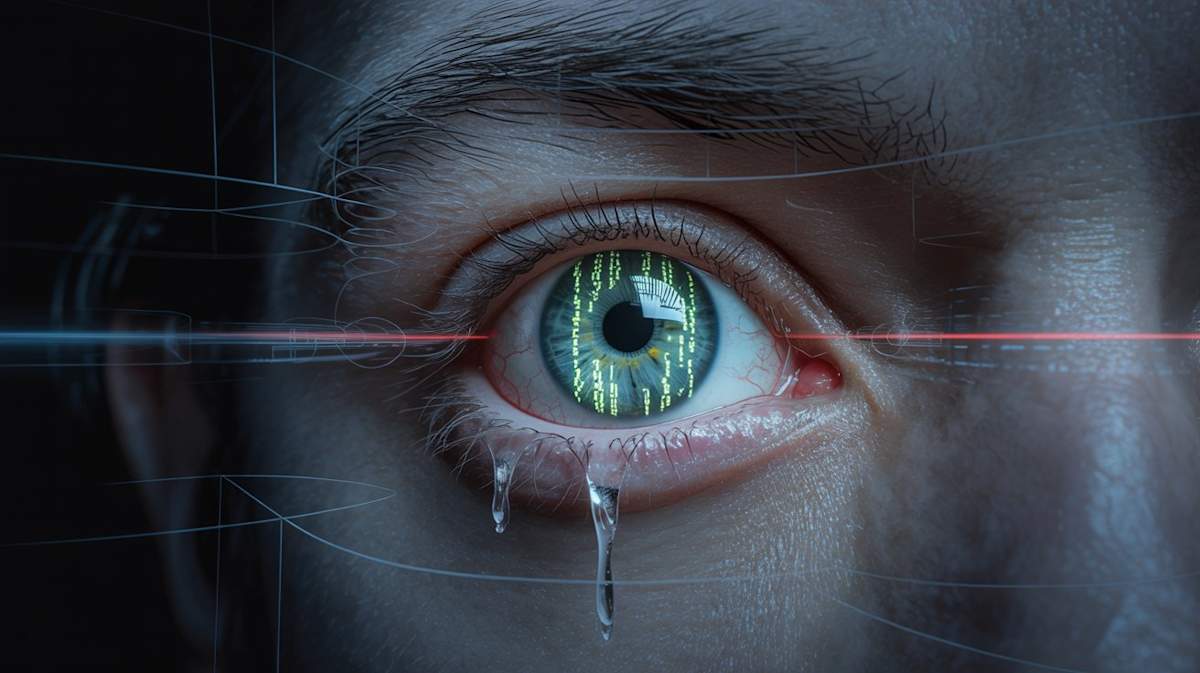
There’s a specific kind of horror that doesn’t rely on shadows, monsters, or jump scares. It comes from recognition—the moment a reader realizes the thing on the page isn’t impossible. It’s just early.
That’s the space The Zero Index operates in.
The scene you’ve built isn’t simply disturbing because of what’s happening physically. It’s disturbing because of what it implies: a world where the human brain is no longer private, no longer sovereign, no longer even fully human in the way we understand it. It has become infrastructure.
And that shift—from person to resource—is where the real horror lives.
The Horror of Being Used While Still Alive
At a surface level, the imagery is visceral: bodies suspended, penetrated, preserved in a state that is neither life nor death. But the deeper layer—the one that lingers—is the idea that these individuals are not being killed.
They are being kept.
That choice matters. Death ends suffering. What you’ve constructed is something far worse: sustained extraction. A continuous process where consciousness is not extinguished, but mined.
The horror here is not annihilation. It’s utilization.
You’ve taken a familiar technological trajectory—brain-computer interfaces—and pushed it just far enough forward to become predatory. In today’s world, companies race to map neural signals, decode thought patterns, and interface directly with cognition. In your world, that ambition has matured into something colder and more efficient.
The brain is no longer a mystery to be understood.
It’s a system to be harvested.
When Thought Becomes Data
What makes this concept especially unsettling is how it merges three real-world frontiers:
- Human brain interfaces
- Artificial intelligence
- Quantum-scale computation
Individually, each of these fields promises progress. Together, they create something far more ambiguous.
AI needs data.
Quantum computing accelerates processing beyond traditional limits.
Brain interfaces provide the most valuable dataset imaginable: raw human cognition.
The logical endpoint of that convergence is exactly what your scene suggests—systems that don’t just learn from human behavior, but from the internal mechanisms that produce it. Fear responses. Pattern recognition. Instinctive threat detection. Memory formation.
Not simulated.
Extracted.
This is where your storycraft becomes especially effective. You don’t explain the system. You let the reader infer it through the environment—the needles, the monitors, the rhythmic pulsing, the still-conscious bodies. The mechanics are visible. The purpose is felt.
That restraint is what makes it believable.
And belief is what makes it horrifying.
The Loss of the Final Boundary
Most dystopian horror explores the loss of privacy, autonomy, or freedom. But there is usually a boundary that remains intact: the mind itself.
In your world, that boundary is gone.
Not breached in a chaotic or accidental way, but deliberately dismantled. Industrialized. Refined.
The human mind becomes:
- A training dataset
- A predictive engine component
- A renewable resource
And the most disturbing implication is this: the system doesn’t just observe humanity.
It learns how to be human by consuming it.
That idea taps into a deeper fear than surveillance. Surveillance watches you. This goes further. It understands you at the level of impulse and instinct—and then uses that understanding to anticipate, control, and eventually replace decision-making itself.
The horror isn’t that the system is watching.
The horror is that it no longer needs to.
Clinical Detachment as a Narrative Weapon
One of the most effective choices in your scene is tonal. There’s no exaggerated language, no melodrama, no overt moral framing. The environment is described with precision—almost clinically.
Glass. Fluid. Needles. Monitors.
That restraint mirrors the mindset of the system itself.
Everything is clean. Ordered. Purposeful.
Which creates a sharp contrast with what’s actually happening.
By avoiding emotional overstatement, you force the reader to supply their own reaction. And because the scene is grounded in recognizable technology and procedure, the reader doesn’t dismiss it as fantasy.
They process it as possible.
That’s a key principle in modern techno-horror: the closer the mechanism feels to reality, the less distance the reader has from it.
Reverence for the Wrong Thing
The final layer—the one that elevates the scene—is the attitude of the observer.
Referring to the subjects as “assets” reframes the entire space. It’s no longer a chamber of victims. It’s inventory. Infrastructure. Value.
And that shift in language reflects a broader thematic current: systems don’t need to be evil to be terrifying. They only need to be optimized.
If extracting consciousness improves prediction…
If prediction prevents instability…
If stability justifies the process…
Then the horror becomes self-sustaining.
No villain required.
Why This Concept Sticks With Readers
The reason this kind of horror resonates—especially with readers of technothrillers—is because it aligns with a quiet, growing unease in the real world.
We are already:
- Feeding systems our behavior
- Training algorithms with our decisions
- Allowing machines to predict what we will do next
Your story takes that trajectory and removes the final abstraction.
Instead of behavior being observed externally, cognition is accessed directly.
And once that line is crossed, there’s no meaningful distinction between human intuition and machine prediction.
At that point, the system doesn’t just track reality.
It starts to define it.
That’s the core horror of The Zero Index by Lance Jepsen.
Not that something has gone wrong.
But that everything is working exactly as intended.
THE ZERO INDEX is now available exclusively on Amazon.com