One of the most important choices a fiction writer makes is which story to tell.
Not just the plot. Not just the characters. The narrative itself.
Every story is built on selection. A writer decides what the reader will see, what they will miss, and which threads of reality will be pulled into the spotlight. The rest fades into the background.
This is true in fiction.
It is also very true in the real world.
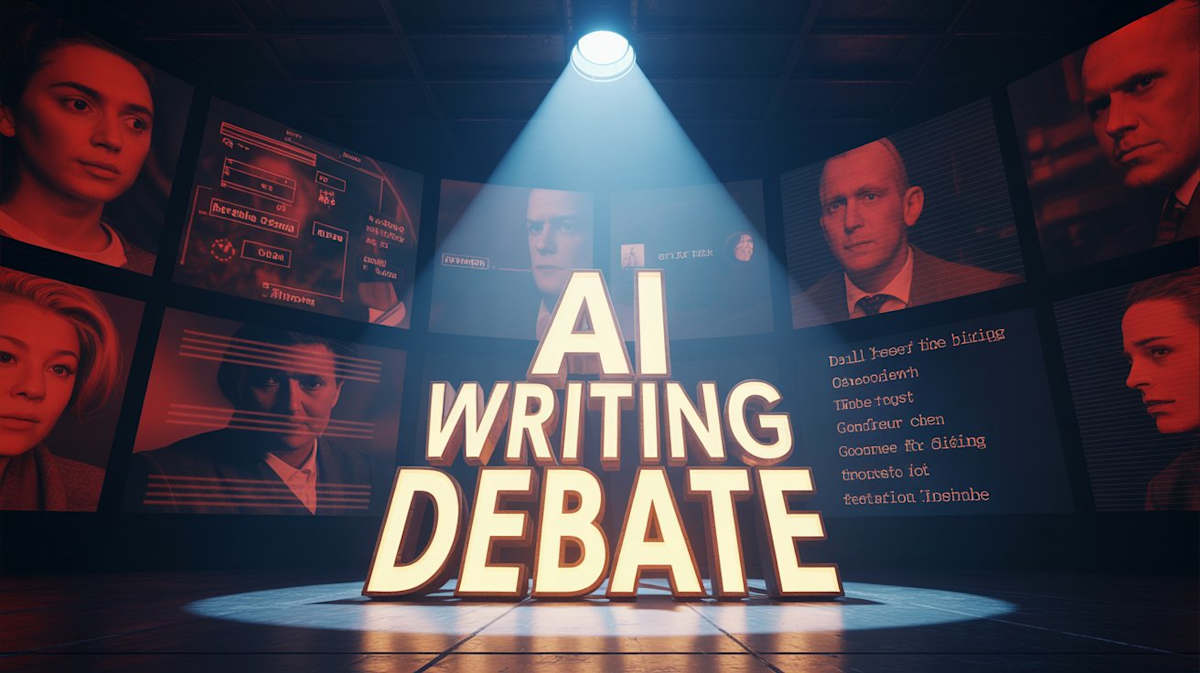
In public conversation, entire debates are often shaped not by facts alone, but by which narratives are allowed to dominate attention. When a particular narrative captures the spotlight, others quietly disappear into the shadows.
Consider the current conversation around artificial intelligence.
A common narrative right now focuses on writers using AI tools to help draft stories. The debate revolves around creativity, authenticity, and whether AI assistance somehow diminishes the work of authors.
It’s an interesting conversation.
But it also occupies a lot of oxygen.
When that narrative dominates the discussion, it becomes easier to avoid talking about other, potentially more serious uses of the same technology. For example, the role AI could play in large-scale surveillance systems run by governments, corporations, or powerful institutions.
Another narrative currently gaining traction involves social media platforms requiring creators to check a box if their content was AI generated. Again, it’s a conversation about transparency and ethics in media.
But while attention is directed toward labeling content, far less attention is given to the ways those same platforms use advanced algorithms and machine learning to analyze enormous amounts of human behavior, speech patterns, and political sentiment across their networks.
The narrative stays focused on the labeling of content.
The deeper narrative about how data itself might be used often stays offstage.
Then there’s another familiar storyline: AI taking jobs.
Automation replacing workers is a legitimate and serious concern. But once again, it can dominate the conversation so completely that other possibilities remain largely unexplored in public discourse. One example would be the potential for coordinated AI systems to influence online conversations, shape public perception, or amplify certain viewpoints across the internet.
The pattern repeats.
One narrative rises to the surface.
Others sink beneath it.
For fiction writers, this is fascinating territory.
Stories have always explored the idea of hidden systems operating behind the visible world. But the concept of narrative selection itself—the deliberate elevation of some narratives while others are quietly buried—remains surprisingly underused as a central theme in fiction.
Who chooses the narrative?
Who benefits from the story that everyone is talking about?
And what important story is being ignored while attention is pointed somewhere else?
Those questions open the door to some very interesting storytelling possibilities.
As writers, we spend a lot of time thinking about the mechanics of plot and character. But sometimes the most powerful storytelling device is simply deciding which narrative the audience is allowed to see.
And which one remains hidden.
It’s fertile ground for future books.