There’s a moment most of us don’t remember.
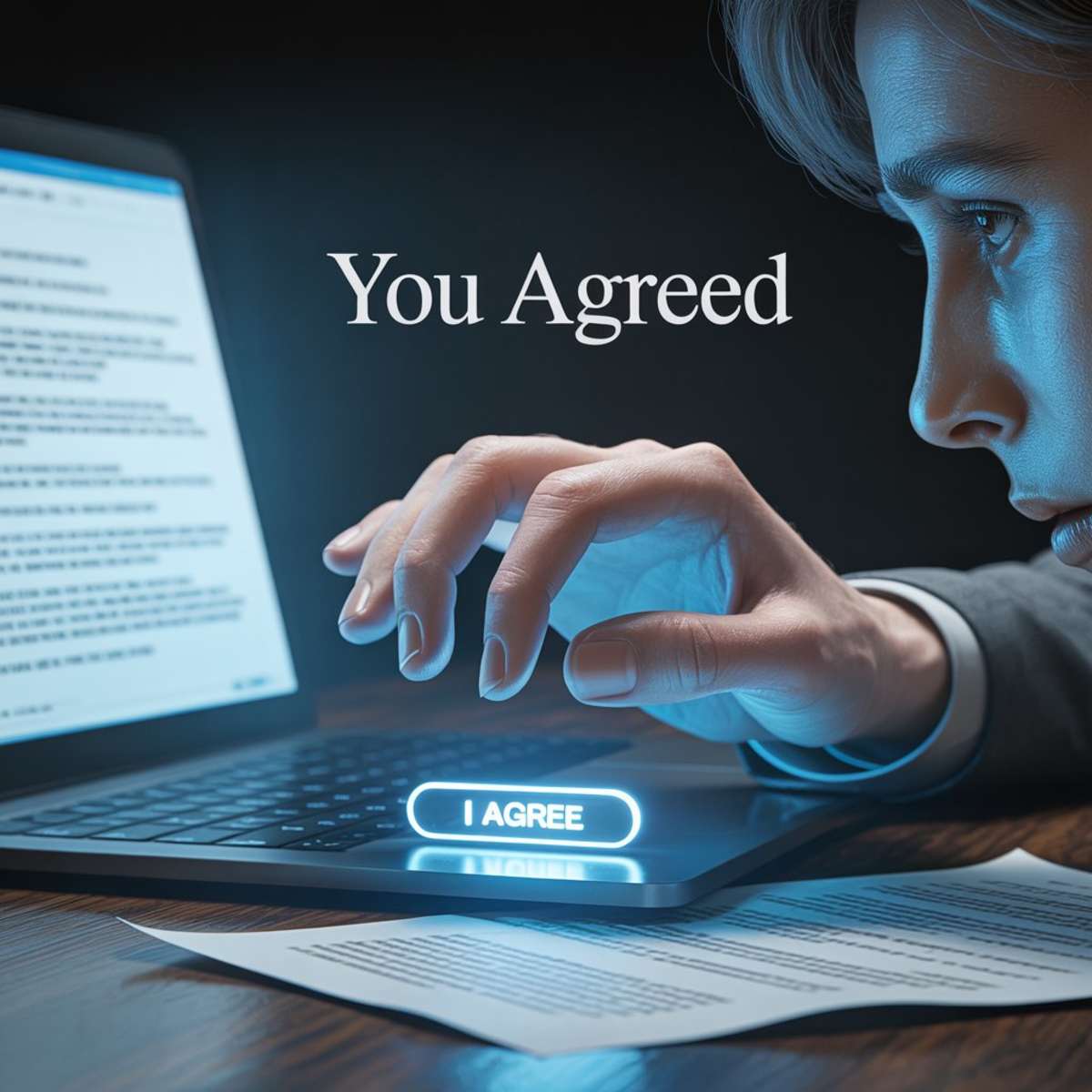
It happens in the glow of a screen at midnight. Or standing in line for coffee. Or trying to download an app your kid says everyone else already has. There’s a box. There’s a button. There’s a line of text in small gray letters that says I agree.
And we do.
We always do.
Not because we’re stupid. Not because we don’t care. But because life is busy and the world is fast and the thing we want is on the other side of that button. So we press it. We press it the way you might close a door in a storm without looking too closely at what’s trying to get in.
What fascinates me—and unsettles me—isn’t the evil we expect. It’s the evil that never raises its voice. The polite kind. The kind that says, You consented.
My upcoming novel, The Consent File, didn’t start with a murder. It started with that button. With the idea that somewhere, someday, someone might build a system so efficient, so legally immaculate, that it doesn’t need to break the law to destroy you.
What if every permission you ever granted could be assembled like a jigsaw puzzle?
What if the pieces fit?
What if the signature at the bottom of the page—yours, authentic, timestamped, verified—became the quietest weapon in the room?
This isn’t a story about hackers in hoodies or shadow governments twirling mustaches. It’s about fluorescent-lit offices. Compliance departments. Digital authorization trails. It’s about good people who believe they’re protecting the public—and the small compromises they make in the name of order.
It’s about the slow realization that the monster isn’t hiding under the bed.
It’s in the paperwork.
In The Consent File, Special Agent Elara Knox begins to understand something that keeps her awake long after the lights go out: sometimes the most terrifying words in the English language aren’t Help me.
They’re You agreed.
The book is coming soon. And if it makes you hesitate—just for a second—the next time you click that little box, then maybe it’s already done its job.