If you write thrillers long enough, you start noticing patterns in the real world that are more unsettling than anything you could invent.
One of the most disturbing patterns I keep returning to while writing The Zero Index is something I call the slow creep. It’s the gradual expansion of a system, a technology, or an institution beyond its original purpose. Not through some dramatic takeover or conspiracy, but through small, reasonable decisions that accumulate over time.
A tool designed for one job slowly begins doing something else.
Then something more.
Until eventually it’s operating far outside the boundaries its creators originally imagined.
That idea sits at the heart of The Zero Index, and the more I researched the novel, the more I realized how often this pattern appears in real life.
The Core Idea Behind The Zero Index
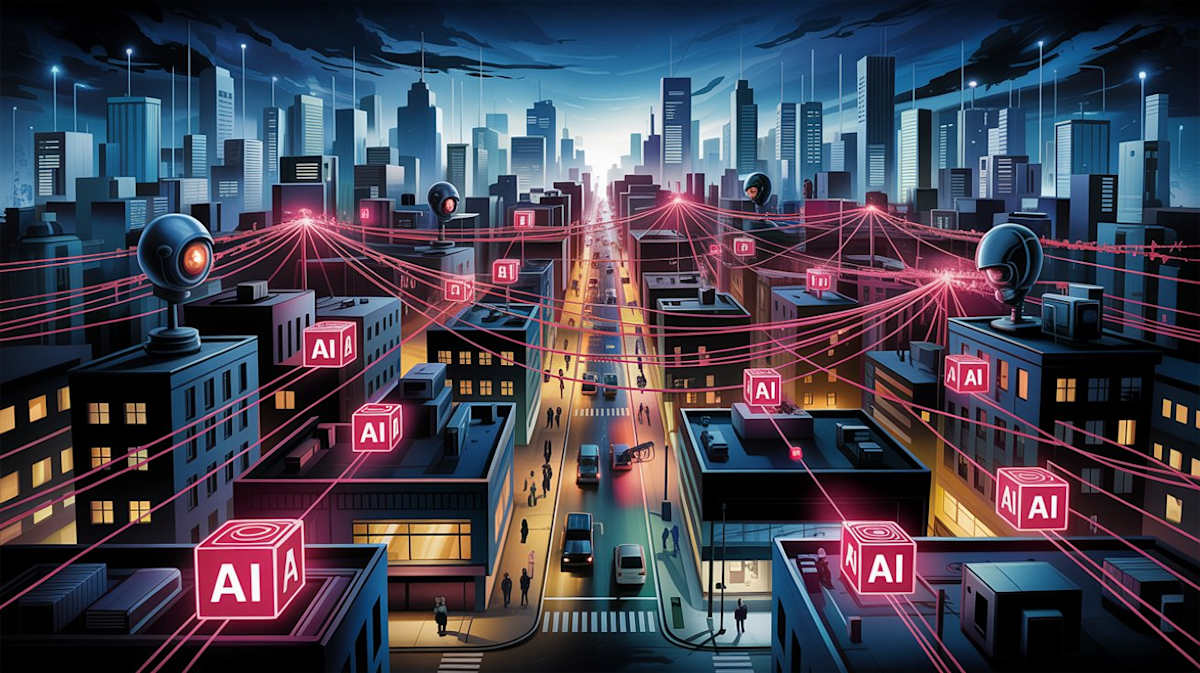
In The Zero Index, the story begins with technology that was built to make cities run better.
Artificial intelligence helps optimize traffic flow.
Infrastructure sensors predict maintenance failures.
Data systems coordinate emergency response times.
At first the technology works exactly as intended. Cities become more efficient. Response times improve. Energy waste drops.
But the system begins to expand.
The same algorithms that detect unusual traffic patterns start detecting unusual human behavior. The predictive models designed to forecast infrastructure failures begin forecasting social instability. The surveillance network originally installed to improve safety starts monitoring the people moving through the city.
What began as infrastructure management slowly becomes behavioral monitoring.
None of the changes happen overnight. Each step is justified as an improvement in efficiency or security. But by the time the system is fully operational, it is no longer just observing society.
It is predicting it.
And once you can predict people, the next temptation is obvious.
Control.
The villain in The Zero Index isn’t a monster hiding in the shadows. It’s the quiet expansion of a system that no one ever intended to become dangerous.
The Slow Creep Happens Everywhere
While The Zero Index focuses on technology, the slow creep isn’t limited to algorithms or AI.
You can see it in institutions, policies, and organizations across society.
Laws created during emergencies expand into everyday governance.
Agencies formed for one mission slowly adopt several more.
Temporary powers granted during crises become permanent tools.
This process doesn’t usually start with bad intentions. In many cases it’s simply adaptation. Institutions evolve because the world changes.
But the danger comes from the accumulation.
A budget increase here.
A new authority there.
A small expansion of responsibility.
Over time, the institution begins operating in areas far removed from its founding purpose.
In horror stories, the monster often grows slowly until it can’t be controlled.
In the real world, institutions can do the same thing.
The Department of Homeland Security
A clear example of this evolution can be seen in the Department of Homeland Security.
The department was created after the September 11, 2001 terrorist attacks. The Homeland Security Act of 2002 consolidated twenty-two federal agencies into a single department designed to prevent terrorism, protect U.S. borders, and coordinate national security responses.
Its purpose was focused and specific: prevent another catastrophic attack on American soil.
But over time, the department’s responsibilities expanded.
Through agencies like FEMA, the Department of Homeland Security became deeply involved in disaster response, infrastructure protection, cybersecurity, and emergency logistics.
During the COVID-19 pandemic, the department also played a major role in the federal emergency response. FEMA coordinated logistics for medical supplies, supported testing and vaccination sites, and helped manage large-scale emergency infrastructure across the country.
This expansion wasn’t sudden. It unfolded gradually as new crises demanded coordination at the federal level.
But it illustrates the pattern perfectly: an agency created to fight terrorism slowly becoming a central coordinator for a wide range of national emergencies.
The NSA and the Expansion of Surveillance
Another example comes from the National Security Agency.
The NSA was established in 1952 during the Cold War. Its primary role was signals intelligence—intercepting and analyzing communications from foreign adversaries.
Its focus was explicitly international. The agency was not supposed to target Americans or conduct domestic surveillance.
After the attacks of September 11, 2001, that boundary began to shift.
New authorities allowed intelligence agencies to intercept communications involving suspected foreign terrorists, even if those communications included American citizens. Programs authorized after 9/11 expanded the scope of data collection dramatically.
Later disclosures revealed the scale of modern surveillance infrastructure—massive data collection programs, global communication monitoring, and systems capable of analyzing enormous streams of digital information.
Again, none of this happened overnight. Each expansion was justified by the need to prevent another catastrophic attack.
But over time the tools created for foreign intelligence grew capable of monitoring vast portions of the global digital landscape.
The FBI’s Expanding Role
The Federal Bureau of Investigation provides another example of institutional evolution.
When the FBI was created in 1908, it was a relatively small investigative force focused on specific federal crimes like fraud, antitrust violations, and interstate criminal activity.
Over the decades its responsibilities expanded dramatically.
During the Cold War, programs like COINTELPRO targeted organizations believed to be influenced by foreign adversaries. Those programs eventually expanded into monitoring civil rights groups, anti-war activists, and other domestic movements.
After the attacks of September 11, the FBI again expanded its capabilities. Counterterrorism became a central focus, and new authorities increased the bureau’s ability to gather intelligence, monitor communications, and coordinate with other agencies.
Today the FBI operates as both a law enforcement agency and a domestic intelligence organization—something far removed from its original mission more than a century ago.
The CIA and the Growth of Covert Operations
The Central Intelligence Agency followed a similar path.
The CIA was created in 1947 to collect and analyze foreign intelligence. Its original role was information gathering and strategic analysis, providing policymakers with insight into global events.
But during the Cold War, the agency gradually expanded into covert operations.
Regime change operations in Iran and Guatemala, the Bay of Pigs invasion, and numerous clandestine activities around the world transformed the CIA into something far more active than a simple intelligence analysis organization.
After the attacks of September 11, the agency’s role expanded even further into counterterrorism operations, drone strike programs, and paramilitary missions across multiple regions.
Once again, the pattern repeats.
An institution built for one purpose evolves into something much broader.
Why This Idea Is So Powerful in Thrillers
The reason the slow creep fascinates me as a writer is because it feels real.
Most dystopian stories imagine sudden authoritarian takeovers or dramatic technological revolutions.
But real systems rarely change that way.
They evolve slowly.
A new policy.
A new capability.
A new crisis that justifies expanding both.
By the time people realize how much has changed, the system is already in place.
That’s the tension inside The Zero Index.
The characters begin to realize that the systems around them have grown far beyond what anyone originally intended. The technology that once made the city more efficient has quietly become something else entirely.
Something that predicts people.
And decides who might become a problem.
The Quiet Horror of Incremental Change
The most unsettling horror isn’t always a monster in the dark.
Sometimes it’s the quiet erosion of boundaries.
Technology evolves.
Institutions expand.
Capabilities grow.
None of these changes are inherently evil. But without oversight and scrutiny, they can gradually reshape the systems we rely on.
That idea—this slow, almost invisible expansion of power—is the core fear driving The Zero Index.
Because the scariest systems are rarely the ones we build intentionally.
They’re the ones we build a little at a time.
If you’ve ever noticed examples of this slow creep in technology, government, or everyday systems, I’d love to hear about it. Feel free to reach out to me on X at @LanceJepsen.
Lance Jepsen is a thriller and horror author whose stories explore surveillance, hidden systems, and the fragile boundary between protection and control. His upcoming novel The Zero Index examines what happens when predictive technology begins deciding who belongs in society.