
The Snow Walker is the kind of movie that does not beg for your attention. It earns it quietly.
Here is the full movie below. Watch it before reading further if you want to experience the story clean, because The Snow Walker works best when you let the cold creep in slowly.
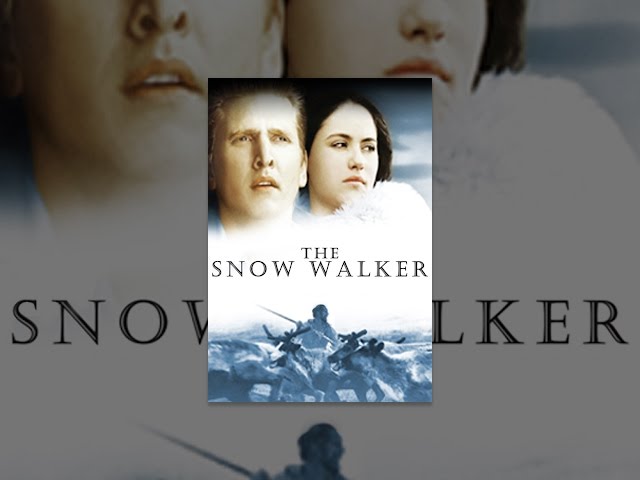

The film, written and directed by Charles Martin Smith, stars Barry Pepper as Charlie Halliday and Annabella Piugattuk as Kanaalaq. It is based on Farley Mowat’s short story “Walk Well, My Brother,” and follows a Canadian bush pilot who crashes in the Arctic with a sick young Inuit woman he has reluctantly agreed to transport to a hospital.
On the surface, this is a survival movie. A plane goes down. Two people are stranded. The land is merciless. Food runs low. Winter comes.
But that is only the machinery of the plot.
The real story is about arrogance being stripped down to bone.
Charlie begins the film as a man who thinks movement equals mastery. He flies over the Arctic, trades with Inuit communities, makes deals, takes risks, and believes the world exists as a series of routes he can map, exploit, and escape. He understands machines. He understands money. He understands how to talk fast enough to get what he wants.
Then the plane crashes.
And suddenly none of that matters.
That is the first great writing lesson in The Snow Walker: a strong premise does not need to be complicated. It needs to be clarifying.
The crash does not add chaos to Charlie’s life. It reveals the chaos that was already inside him. The tundra does not create his flaws. It exposes them. His impatience, ego, entitlement, fear, and spiritual emptiness are all dragged into the open because the landscape gives him nowhere to hide.
That is what great survival fiction does. The environment becomes a truth serum.
The movie uses the Arctic as more than setting. It is an antagonist, a mirror, and a moral force. The tundra is beautiful, but it is not sentimental. It does not care whether Charlie learns anything. It does not care whether he apologizes. It does not care that he has charm, experience, or a reputation. It simply exists, and he either adapts to it or dies.
For writers, that is a powerful reminder: setting should not just decorate the story. Setting should pressure the character.
The Snow Walker also uses contrast beautifully. Charlie is loud, restless, and reactive. Kanaalaq is quiet, observant, and patient. He tries to dominate the situation. She tries to understand it. He sees the Arctic as empty space between rescue points. She sees it as a living world filled with signs, patterns, tools, dangers, and gifts.
That contrast creates the emotional engine of the film.
The story does not need constant argument because the conflict is embedded in worldview. Charlie thinks survival means conquering the land. Kanaalaq knows survival means listening to it.
That is a more mature kind of conflict than simple bickering. Their disagreement is not just about what to do next. It is about what kind of person you must become in order to live.
One of the most effective literary devices in the film is the character foil. Kanaalaq functions as Charlie’s opposite, but not in a simplistic way. She is not there merely to teach him a lesson. She has her own knowledge, dignity, illness, humor, and inner life. Her silence is not emptiness. It is discipline. Her calm is not weakness. It is competence.
This is where the film avoids a common survival-story trap. It does not turn knowledge into a lecture. Kanaalaq does not stop the movie to explain every detail of Arctic survival. She acts. She makes boots. She prepares food. She reads the land. She shows Charlie what matters by doing it.
Writers should pay attention to that.
Competence is more compelling when it is dramatized instead of explained.
The movie also uses symbolism with admirable restraint. The walrus tusks begin as payment. To Charlie, they are objects of value. They are part of the deal. They represent profit, leverage, and transaction. But by the end, their meaning changes. What began as a bribe becomes part of a burial offering, something spiritual and human.
That is elegant symbolic writing.
The object does not change. The character does.
This is how symbols should work in fiction. They should gather meaning as the story progresses. A symbol that arrives already labeled is usually dead on arrival. A symbol that changes because the protagonist changes becomes part of the emotional architecture.
The Snow Walker also uses silence as a storytelling device. Many modern films are terrified of quiet. They fill every emotional gap with dialogue, explanation, music, or exposition. This movie trusts stillness. It lets the viewer sit with distance, cold, hunger, and breath.
That silence creates intimacy.
When Charlie and Kanaalaq cannot fully communicate through language, the story becomes more physical. Gesture matters. Facial expression matters. The sharing of food matters. The making of clothing matters. The act of walking beside someone matters.
For novelists, this is gold.
Dialogue is not the only way characters speak. Sometimes a character reveals more by repairing a boot than by delivering a confession. Sometimes the deepest relationship development happens without anyone naming the relationship.
The film also uses dramatic irony. Charlie believes he is the capable one because he has the plane, the radio, the maps, and the confidence. The audience quickly understands that Kanaalaq is the one with the knowledge that matters. That reversal gives the story its shape. The man who thinks he is rescuing her slowly realizes she has been rescuing him.
That reversal is emotionally satisfying because it is earned.
Charlie does not become humble overnight. He fights reality first. He complains. He panics. He makes bad assumptions. He tries to force the world back into the shape he understands. Only after repeated failure does he begin to see Kanaalaq clearly.
That is another lesson for writers: transformation should cost the character something.
A character arc is not a costume change. It is a surrender. Charlie has to surrender his fantasy of control. He has to stop seeing Kanaalaq as cargo, burden, obligation, or transaction. He has to see her as a person. More than that, he has to see that she understands the world in ways he never bothered to learn.
The Snow Walker is also a masterclass in externalizing internal change. Charlie’s physical journey across the Arctic reflects his moral journey. At first, he is trying to return to civilization. Later, he is trying to preserve Kanaalaq. By the end, he is carrying not just her body or memory, but the knowledge she gave him.
That is why the ending hurts.
The story does not give us a cheap rescue. It gives us a transformed survivor.
There is a huge difference.
A cheap rescue says, “The hero lived.”
A strong ending says, “The person who lived is not the same person who crashed.”
Writers can learn a lot from how The Snow Walker handles stakes. The movie does not need villains, gunfights, betrayals, or explosions. The stakes are elemental: cold, hunger, illness, distance, pride, misunderstanding, and time. Every day matters. Every mistake matters. Every bit of knowledge matters.
That is clean storytelling.
The clearer the danger, the less you need to inflate it.
The film also understands that death in fiction is most powerful when it has meaning beyond shock. Kanaalaq’s fate is not treated as a twist. It is treated as tragedy, sacrifice, and spiritual passage. The film has spent enough time building her dignity that her loss lands with weight. She is not disposable. She is the moral center of the story.
For writers, that matters. If a character dies only to motivate another character, the death can feel cheap. But if the character has changed the world of the story, if their presence has altered the protagonist’s soul, then their absence becomes enormous.
That is why Kanaalaq stays with the viewer.
Not because the film tells us she matters.
Because the story proves it.
Another literary device at work here is the journey motif. The Snow Walker is physically about crossing land, but emotionally it is about crossing from ignorance to reverence. Charlie moves from extraction to gratitude, from arrogance to humility, from isolation to connection. The title itself suggests that survival is not just about walking through snow. It is about becoming someone who can walk through suffering without being spiritually hollowed out by it.
The movie also uses minimalism. There is no overcomplicated mythology. No giant conspiracy. No constant plot machinery. Just two people, one impossible landscape, and a series of choices. That simplicity gives the emotional beats room to breathe.
This is something writers forget all the time.
Simple does not mean shallow.
Simple means there is nowhere to hide.
When a story is stripped down, every scene has to matter. Every gesture has to carry weight. Every object has to earn its place. Every line of dialogue has to reveal character or deepen tension. The Snow Walker works because it trusts the audience to lean in instead of dragging them forward by the collar.
What writers can learn from The Snow Walker is this: put your character somewhere their usual strengths no longer work. Then force them to learn from the person they underestimated.
That is drama.
Not noise. Not plot clutter. Not endless escalation.
Drama.
The Snow Walker is quiet, patient, and deeply human. It understands that survival stories are never really about surviving the wilderness. They are about discovering what civilization has failed to teach us. They are about the difference between having tools and having wisdom. They are about the terrible beauty of learning too late, and the grace of learning at all.
For writers, that may be the film’s greatest lesson.
The strongest stories do not always ask, “Will this character live?”
Sometimes they ask something much harder.
“If this character lives, who will they become?”