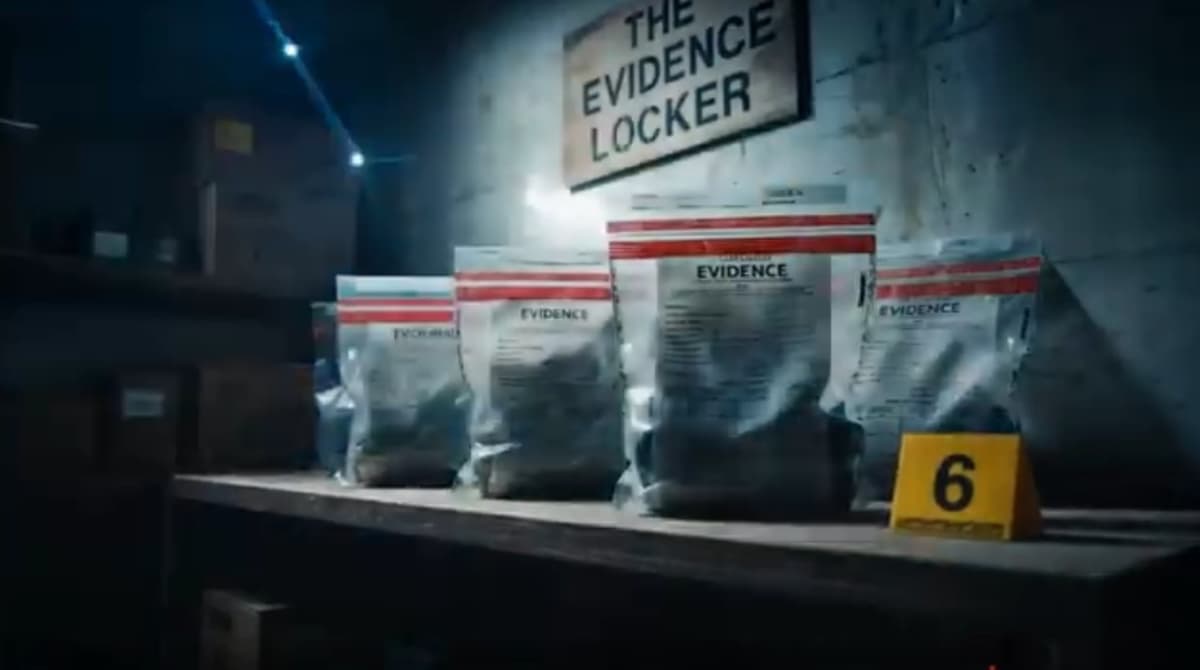
The Evidence Locker: A Dark Mystery Thriller is now available on Amazon.
That’s the official sentence. The tidy one. The sentence that behaves.
But books don’t really begin there. They begin in smaller places. Quieter ones.
They begin with a question that won’t shut up.
For me, this one started with a room.
Not a dramatic room. Not one with flickering lights and a corpse under a tarp. Just a standard police evidence room—metal shelving, banker boxes, plastic bins with barcodes, property tags tied in careful knots. The kind of room that smells faintly like dust and cardboard and old coffee.
And I kept wondering:
What if nothing in this room is actually missing?
What if it’s all here… just not where it’s supposed to be?
That question isn’t plot. It’s pressure.
And pressure is where story lives.
Writing the System Instead of the Villain
When I first began drafting The Evidence Locker, I thought I was writing a mystery about a single case. A clever pattern. A smart detective. A dangerous antagonist.
But craft has a way of correcting your ego.
The deeper I went, the more I realized the real antagonist wasn’t a person. It was a system. A structure that protects itself the way a body clots around a wound.
That changed everything about how I approached the writing.
In thriller craft, we’re often told to escalate through action. Bigger threats. Sharper twists. Louder danger.
But what scared me most while writing this book wasn’t noise.
It was procedure.
It was the quiet memo.
The form filled out correctly.
The chain-of-custody log signed without hesitation.
Craft-wise, that meant restraint. It meant letting tension build in small administrative choices. It meant showing how a minor reclassification could ripple outward like a stone dropped into still water.
The horror of the ordinary.
That’s harder to write than a gunfight.
The Problem of Competence
One of the things I wrestled with most while writing Mara Kincaid was this:
If she’s competent—and she is—why doesn’t she fix it immediately?
That’s the craft trap. If your protagonist is sharp, readers expect resolution. Fast.
But systems don’t break because one person notices something wrong. They adapt. They redirect. They reassign.
So the tension became internal as much as external. Not “Can she solve it?” but “What does it cost her to keep pushing?”
Writing that cost felt personal.
Because every writer knows this moment:
You see something in your own draft that isn’t working.
You can ignore it.
Or you can tear it down and rebuild it.
The rebuild is expensive. In time. In ego. In doubt.
Mara’s journey mirrored that process more than I expected.
Inside Mara Kincaid’s Head
Mara doesn’t walk into a room.
She surveys it.
Three steps past the threshold—she notes the hinge creak on the second door panel, estimates the weight by the pitch. Forty pounds, maybe forty-five. Cheap composite core. If someone slammed it hard enough, it would split near the lock plate. She logs that away.
The distance from the evidence counter to the far wall: twelve feet, four inches. Fluorescent hum at approximately sixty hertz. One bulb flickering in a stutter that repeats every nine seconds. Nine seconds is long enough for a hand to move something from one shelf to another.
She counts shelves the way other people count blessings.
Top tier: labeled narcotics, sealed in heat-welded plastic.
Second tier: firearms, tagged in red.
Third tier: miscellaneous—always the dangerous word. Miscellaneous is where truth goes to soften.
Mara doesn’t see “a box.”
She sees a banker box, 15 by 12 by 10 inches. Cardboard bowing slightly on the left side, meaning it’s been lifted one-handed. The dust on the lid is uneven—someone’s touched it recently. The tape seam isn’t factory-straight; it was resealed at a slight diagonal, maybe three degrees off center.
Three degrees is not an accident.
Three degrees is a decision.
That’s how her mind works. It measures. It triangulates. It reconstructs the invisible geometry of intent.
If the reader feels the weight of those measurements, that’s because Mara does. She can’t turn it off. The world arrives to her in angles and inches and time stamps. Conversations aren’t just words—they’re pauses measured in seconds, eye movements tracked like compass bearings. A suspect shifts his stance two inches backward? That’s retreat. A lieutenant hesitates before answering by half a beat? That’s calculation.
Mara catalogs people the way the department catalogs evidence.
Height. Posture. Breathing rate. The space between what they say and what they mean.
It’s risky to write a mind like that. There’s a danger of exhausting you, of burying the story beneath rulers and stopwatches and invisible grids. But this is how she survives. This is how she knows when something is wrong.
Because wrong, to Mara, isn’t a feeling.
It’s a discrepancy.
A quarter inch where there should be none.
A timestamp off by eleven minutes.
A box returned to a shelf two inches farther left than before.
Most people move through the world in broad strokes.
Mara moves through it in millimeters.
And somewhere inside those millimeters—inside the narrow gap between what is logged and what is true—she finds the fracture line.
That’s where the story lives.
That’s where the danger begins.
The Locker as Metaphor
Craft confession:
The evidence locker stopped being a location halfway through drafting. It became a metaphor for the things we rationalize.
Writers do this all the time.
We keep scenes because they’re clever.
We keep dialogue because it sounds good.
We keep subplots because we worked hard on them.
Even when they don’t belong.
An evidence locker isn’t just storage.
It’s justification.
What stays.
What gets archived.
What quietly disappears.
Revisions on this book were less about polishing prose and more about auditing truth. I had to ask uncomfortable questions about motivation, about complicity, about who benefits when something is “handled internally.”
Those are craft questions.
They’re also human ones.
Why a Trailer?
I don’t think stories need trailers.
But I do think mood matters.
Tone matters.
The feeling you get before you turn the first page matters.
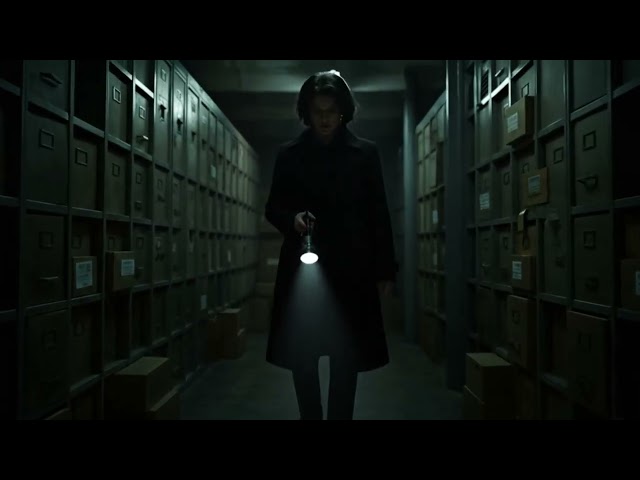
So I created a short cinematic trailer—not to summarize the plot, but to capture the atmosphere. The weight of fluorescent lights. The sense that something procedural can still be deeply wrong.
You can watch it here:
▶️ Official Trailer – The Evidence Locker

Letting It Go
There’s a strange quiet that comes after publishing a book.
You spend weeks (sometimes months) obsessing over commas, pacing, character arcs, the rhythm of sentences. You move scenes around like furniture in a house you’re not sure anyone will visit.
Then one day, it’s out in the world.
And you don’t get to adjust it anymore.
That’s the part no one talks about in craft discussions.
Letting go is part of writing.
Trusting that the story will find the readers who feel that same itch you did when you first imagined a room full of labeled boxes and thought:
Something’s wrong here.
If you’re curious, the book is out there now. Sitting quietly on a digital shelf.
Just another file.
Properly cataloged.
Or so it seems.