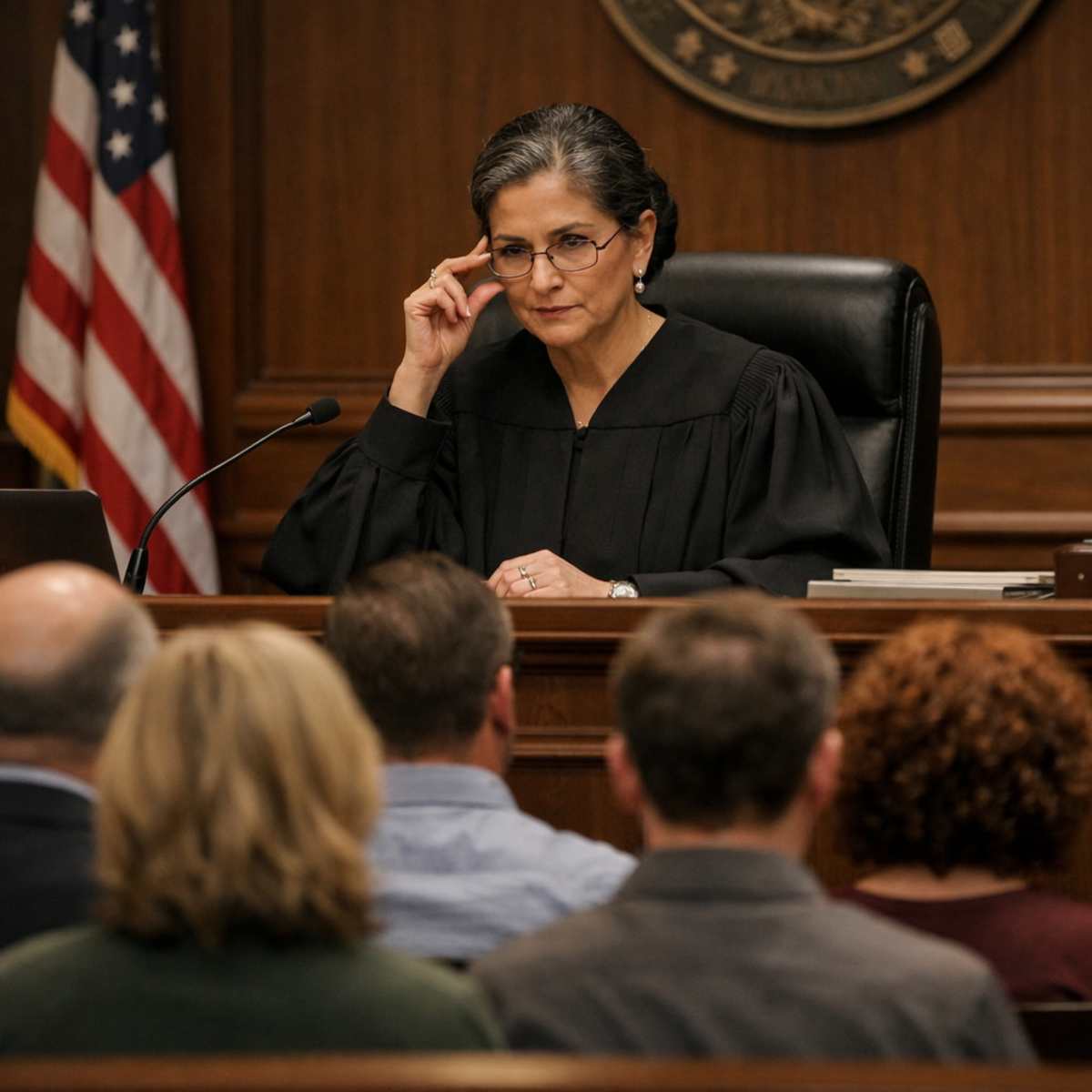
At 8:15 sharp, the courtroom shifts.
The door opens. The judge enters. Everything else—conversation, movement, distraction—falls away.
In this moment, before opening statements, before evidence, before anyone says the word “guilty,” the real trial begins.
It’s called voir dire.
And in legal thrillers, it’s one of the most powerful—and often overlooked—battlegrounds in the entire story.
The Scene: Control, Precision, and Observation
Judge Arroyo doesn’t waste motion. Twenty years on the bench has refined everything—how she sits, how she scans the room, how long her gaze rests on a face.
That detail matters.
Because in a courtroom, nothing is accidental.
When she tells the jury pool that voir dire is the foundation of a fair trial, it sounds procedural. Routine. Almost administrative.
It isn’t.
It’s strategy.
It’s psychology.
It’s the quiet sorting of human bias before the first piece of evidence is ever introduced.
Hollis knows that. That’s why she slows down before entering. Why she takes that one controlled breath.
Because once she steps inside, she’s not just a lawyer.
She’s reading people.


What Voir Dire Really Is (And Why It Matters in Legal Thrillers)
In real-world law, voir dire is the jury selection process. Attorneys question potential jurors to uncover bias, conflicts, or hidden assumptions that could influence a verdict.
In fiction, it’s something more.
It’s where tension hides in plain sight.
Three jurors nod at the same moment. That’s not random. That’s a signal.
Someone is aligned.
Someone is persuadable.
Someone is already leaning—whether they realize it or not.
For a legal thriller, this is gold.
Because the jury isn’t just background. It’s a living system. Twelve unpredictable variables that can be shaped, influenced, or misread.
And once the trial begins, it’s too late to change them.
The Quiet War Before the Trial
Most readers expect the drama to come from cross-examinations, surprise evidence, or last-minute confessions.
But the smartest legal thrillers understand something deeper:
The verdict is often decided long before any of that happens.
It starts here.
With posture.
With eye contact.
With who hesitates before answering a question.
Hollis isn’t just listening to what jurors say. She’s watching how they say it. Who looks down. Who leans forward. Who nods without thinking.
Because bias rarely announces itself.
It leaks.
Why This Scene Works for Legal Thriller Readers
Scenes like this tap into something legal thrillers do better than almost any genre:
They turn ordinary environments into high-stakes arenas.
A courtroom isn’t just a room. It’s a controlled system where every movement has consequence.
A judge’s pause creates pressure.
A juror’s nod becomes a clue.
A single breath before entering signals that what happens next matters.
That’s the tension legal thriller readers crave—not chaos, but control under strain.
Final Thought: The Trial Before the Trial
By the time opening statements begin, the foundation is already set.
The jury is chosen.
The biases are in place.
The outcome has started to take shape.
And most people in the room don’t even realize it.
That’s what makes voir dire such a powerful tool in legal fiction, and such a dangerous one inside the story itself.
Because the real question isn’t just what the jury will decide.
It’s whether the decision was inevitable from the moment they sat down.
Free legal thriller short story: