
Here is the full scene from Glass below. Watch it first if you can, because the terror of this sequence is not built from dialogue, gore, or spectacle. It is built from absence.
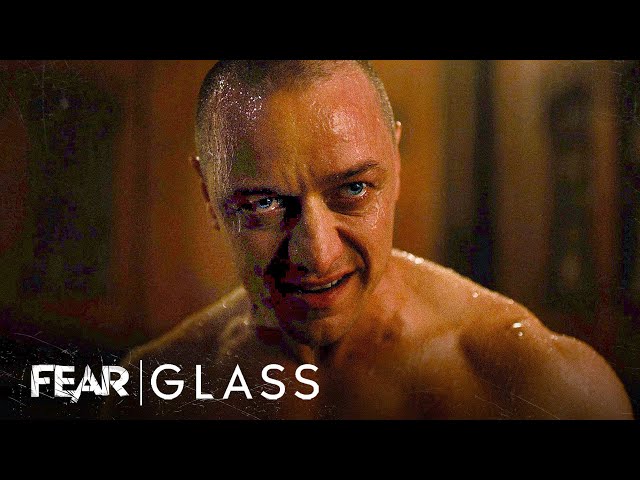

The scene moves through empty space, broken communication, shadow, pursuit, and confusion until the audience realizes something worse than violence is happening. M. Night Shyamalan is not just staging a superhero confrontation. He is staging a horror scene where power feels unstable, identity feels fractured, and rescue arrives too late to feel safe.
Glass is often discussed as the closing chapter of Shyamalan's Unbreakable trilogy, but this scene works because it refuses to behave like a superhero movie. There is no triumphant entrance. No clean battle geography. No soaring music telling us who to root for. Instead, the scene begins with something almost casual and human. A kid talks about watching a documentary about space. The universe is "real big." It is an awkward, ordinary line, but it matters. It places the characters against a massive, indifferent scale. Then, suddenly, the scene tightens into panic.
"It's him."
That shift is pure horror writing. The ordinary world is interrupted by recognition.
The first major literary device in the scene is contrast. Shyamalan places small, almost silly human speech against the presence of something monstrous. A documentary about space sits beside an abandoned brick factory. The cosmic becomes personal. The large becomes claustrophobic. The scene opens wide, then traps us in a decaying industrial space where red clay, darkness, and old machinery make everything feel buried, raw, and unsafe.
The abandoned brick factory is not just a location. It is Gothic imagery dressed in modern clothes. Classic Gothic fiction loves ruined castles, locked rooms, old houses, and hidden chambers. Glass replaces the castle with an industrial ruin. Red clay piles become almost bodily. The factory feels like a place where people are not rescued. They are processed. That setting does a lot of silent work for the scene. It tells the viewer that civilization has stepped away from this place. Nobody is coming quickly. Nobody is in control.
Another major device is dramatic irony. The audience knows how dangerous Kevin Wendell Crumb and the Horde can be. The people entering the space are operating with incomplete information, but we are not. That gap creates dread. Every time someone moves deeper into the factory, the viewer is ahead of them emotionally. We know this is a bad idea before the scene proves it. That is one of the cleanest ways to build suspense: let the audience understand the danger before the characters fully do.
The transcript itself shows how little language remains once the scene turns. The dialogue collapses into fragments. "Dad." "Hey." "Don't." "Who are you?" "Where did it go?" "Leave." This is an excellent lesson for writers. Fear destroys eloquence. Characters in real danger rarely deliver polished speeches. They gasp, repeat, mishear, cut themselves off, and say the obvious because the obvious has become impossible to process.
That fragmented language becomes a literary device of its own. It creates disorientation. The viewer does not receive a clean explanation. We receive pieces. Shyamalan lets silence and broken speech carry the tension. In prose, this same effect can be created with shorter sentences, interrupted thought patterns, physical details, and sensory confusion. A terrified character does not need to explain the monster. They need to notice the scrape behind them, the missing shadow, the smell of wet clay, the sound that stops too quickly.
The scariest part of the scene is the way it weaponizes negative space. We are afraid of what is not visible. "Where did it go?" is a more frightening line than a detailed description of the Beast would be. The question tells us the threat has moved beyond ordinary tracking. It was there. Now it is not. That gap is where fear lives.
Good horror often depends on controlled absence. The audience imagines movement in the dark. The viewer scans the frame. The mind fills in what the camera withholds. Shyamalan understands that showing less can make the viewer work harder, and when the viewer works harder, the fear becomes personal. The monster is no longer only on screen. It is in the act of searching for it.
The scene also uses sound as a storytelling device. The transcript is filled with music cues, but the important point is not merely that music plays. It is that music carries the emotional logic when dialogue disappears. The score becomes pressure. It tells us the scene is tightening even when we do not fully understand the physical layout. In fiction, writers cannot use music directly, but they can use rhythm the same way. Sentence length, paragraph breaks, repetition, and silence on the page can all become a kind of score.
One of the best choices in the scene is that it does not treat power as clean or heroic. David Dunn is strong, but his strength does not make the situation safe. Kevin is terrifying, but not in a simple villain way. When Barry surfaces near the end and begs the officers not to shoot, the scene becomes even more disturbing because the monster is also a victim. "My name is Barry." That line breaks the horror open. Suddenly, the threat has a human face again.
That is where Glass becomes more interesting than a standard monster scene. The fear is not just "will the creature attack?" The fear is "who is actually here right now?" Kevin's body becomes a haunted house. Barry, Kevin, the Beast, and the other identities turn the character into a living chamber of locked doors. That is psychological horror at its strongest. The danger is not only physical. It is internal, unstable, and unpredictable.
The scene uses identity fragmentation as both plot and metaphor. Kevin's shifting identities externalize the terror of not knowing who will answer when someone speaks. Writers can learn a lot from that. A villain, monster, or dangerous character becomes more frightening when they are not emotionally consistent in an easy way. Predictability lowers fear. Volatility raises it. But the volatility has to come from character, not random behavior. In Glass, the shifts matter because they are tied to trauma, survival, and control.
The line "we have to get Kevin to stay in the light" is one of the most important lines in the scene. On the surface, it is literal. Light helps control who is present. But symbolically, it is much bigger. Light becomes identity, sanity, restraint, and mercy. Darkness becomes the place where the Beast returns. That is classic symbolism, but Shyamalan keeps it functional. The symbol is not floating above the scene as decoration. It affects the immediate danger.
That is a crucial writing lesson. Symbols are strongest when they also do plot work. A locked door should not only symbolize entrapment. It should actually trap someone. A storm should not only symbolize emotional chaos. It should flood the road, cut the power, or hide the footsteps. In this scene, light is not just meaningful. It is useful. It changes what can happen next.
The scene is scary because it mixes three kinds of fear at once.
First, there is physical fear. The Beast can kill people. The factory is dangerous. The officers are armed. Violence can erupt at any second.
Second, there is psychological fear. Kevin's identities shift under pressure. The audience cannot trust a stable personality to remain in control.
Third, there is institutional fear. Once the police arrive, things do not feel safer. Guns come up. Misunderstanding escalates. People shout. Everyone thinks they are solving the problem, but they may be making it worse.
That third fear is very Shyamalan. Glass is not simply afraid of monsters. It is afraid of systems that misread miracles as disorders, trauma as threat, and power as something to be contained. The police presence creates a terrible irony. The people who arrive to control the violence may be the reason violence becomes inevitable.
Writers can also study the way the scene uses escalation. It begins with information: a location, a clue, red clay, an abandoned factory. Then it moves into search. Then into encounter. Then into disappearance. Then into confrontation. Then into attempted de-escalation. Each stage changes the kind of tension. The scene does not simply get louder. It mutates.
That is a better model for suspense than just "make things worse." Suspense works best when pressure changes shape. A mystery becomes a chase. A chase becomes a hiding scene. A hiding scene becomes a moral choice. A moral choice becomes a tragedy. The audience stays engaged because they are not just waiting for impact. They are trying to understand what kind of danger the scene has become.
There is also a strong use of delayed comprehension. The viewer does not receive the full emotional meaning right away. The scene forces us to interpret fragments in real time. Where is the Beast? Who is speaking? Who is in control? Are the police helping? Can David stop this without making it worse? That delay creates participation. We are not passive. We are assembling the scene while it happens.
That is something prose writers should steal shamelessly. Do not always explain the danger before the character enters it. Let the reader discover it through wrong details. The room smells wrong. The floor has fresh dust except for one clean line. The missing person is not screaming anymore. The flashlight catches something wet on the wall. The reader should feel smart enough to worry before the character says, "Something is wrong."
What makes this scene especially unsettling is that the horror is not cleanly separated from sadness. Barry begging not to be shot is not a monster moment. It is a trapped-person moment. The scene asks the audience to hold two truths at once: Kevin is dangerous, and Kevin is not simply evil. That emotional contradiction gives the sequence weight. Pure evil can be scary, but wounded danger is often scarier because it cannot be solved by hate alone.
David's presence adds another layer. He is supposed to be the protector. Joseph's voice at the end, "David, it's going to be okay," should comfort us. Instead, it lands with dread because we can feel how fragile that reassurance is. The line sounds like someone trying to hold a collapsing wall with both hands. It is love, but it may not be enough.
That is probably the deepest fear in the scene: not that evil exists, but that goodness may arrive underpowered, misunderstood, and too late.
For writers, the biggest lesson from this Glass scene is that fear does not require constant explanation. It requires control. Control what the audience sees. Control what the characters know. Control when language breaks. Control when the monster is visible and when it is only implied. Control the setting so it does more than sit behind the characters. Control the symbol so it affects the action. Then, when the scene finally opens into panic, the reader feels like the terror was waiting there the whole time.
The second lesson is to let your monster carry grief. A frightening character becomes more memorable when they are not only a threat but also a wound. Kevin's shifting identities make him dangerous, but Barry's plea makes him tragic. That combination is harder to dismiss. It stays with the audience because the scene refuses to let us feel only one thing.
The third lesson is that silence can be more brutal than spectacle. The spaces between the lines in this scene are doing almost as much work as the lines themselves. The missing information, the empty factory, the broken calls, the offscreen movement, the sudden shifts in identity, the music swelling under confusion. All of it creates a kind of dread that feels less like a jump scare and more like a system failure.
Glass works in this scene because it understands that superheroes are not automatically comforting. Put them in the wrong setting, strip away the mythology, remove the clean moral framing, and they become frightening. A strong man in a raincoat. A broken man with a beast inside him. Police with guns.
No capes. No glory.
Just power, trauma, fear, and people standing in the dark, hoping the right person stays in the light.