
The courtroom record would show nothing unusual.
Voir dire proceeded as expected.
Questions were asked.
Jurors answered.
Attorneys evaluated bias, background, and credibility.
On paper, the process worked exactly the way it was designed to.
Voir dire exists for one purpose above all else: to ensure an impartial jury.
Each juror is meant to be considered individually.
Each answer weighed on its own.
Each perspective separate from the others.
That independence is the foundation of every fair trial.
But consider a small moment. One that would never make it into the transcript.
During jury selection, every juror in the box turns their head at the exact same time.
Not gradually.
Not in response to a clear stimulus.
At the same time.
Perfectly synchronized.
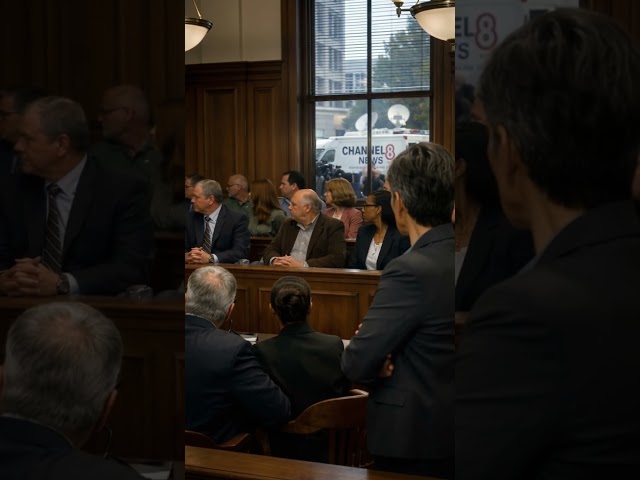

Then they return to normal, and the questioning continues.
No objection is raised.
No note is made.
No one addresses it.
Because maybe it was nothing.
Or maybe it was something no one could explain.
Now ask yourself a simple question:
How confident would you be in the independence of that jury?
This is where legal thrillers live.
Not in the obvious flaws. Not in the loud mistakes. But in the quiet inconsistencies that should not exist at all.
Voir dire is designed to uncover bias. It is not designed to detect coordination.
It assumes that each juror is thinking independently. It assumes that answers are formed individually, without influence from the group.
But what happens when behavior begins to align in ways it should not?
What are we actually measuring at that point?
Bias?
Or compliance?
This distinction sits at the core of many legal thriller stories because it cuts directly into the integrity of the system itself.
A trial is not just a presentation of evidence. It is a structure built on trust. Trust that the jury is independent. Trust that decisions are made freely. Trust that what happens inside that room reflects genuine human judgment.
The moment that trust begins to crack, even slightly, everything else becomes unstable.
That is where tension lives.
Not in proving something is wrong.
But in realizing that something feels wrong, and no one else is reacting.
If you are drawn to legal thrillers, courtroom dramas, and stories where the system appears to function perfectly on the surface while something deeper shifts underneath, this is the territory where those stories begin.
The question is never just what happened.
The question is whether the people deciding what happened are truly deciding anything at all.
If this idea stays with you, there is more beneath the surface.
You can find a free story waiting for you here:
https://books.plot-studios.com/