There’s a specific kind of scene I look for when I’m writing, one where the story stops suggesting and starts revealing. Not with exposition. Not with explanation. Just a shift in the air. A moment where the character crosses a threshold and everything on the other side feels wrong before they can articulate why.
This was one of those scenes.
I was working on a sequence in The Last Orbit where Gordon breaches an arkship’s preservation chamber for the first time. Up to that point, there are hints. Gaps. Things that don’t quite line up. But this is the moment where ambiguity collapses into something physical.
Here’s the passage:
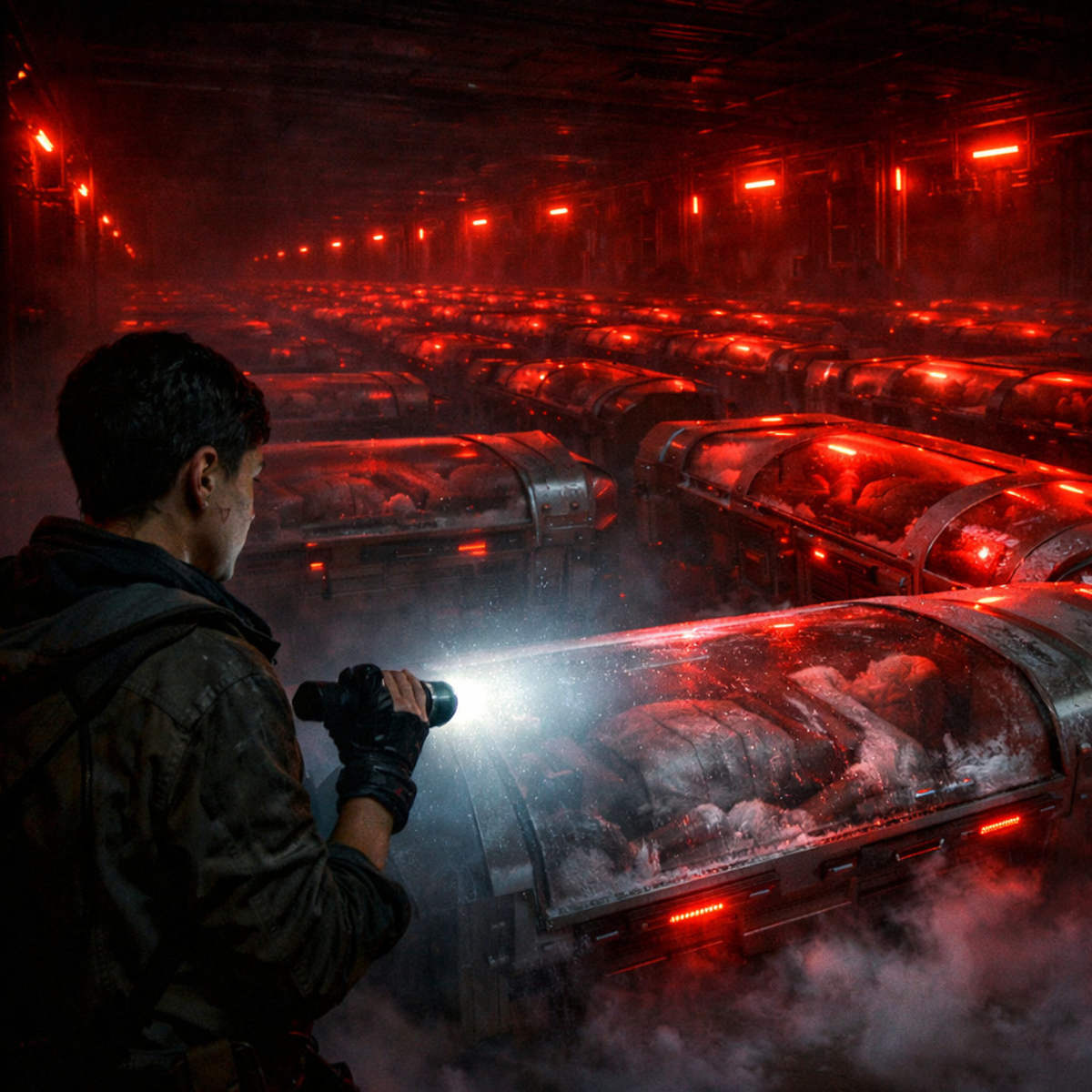
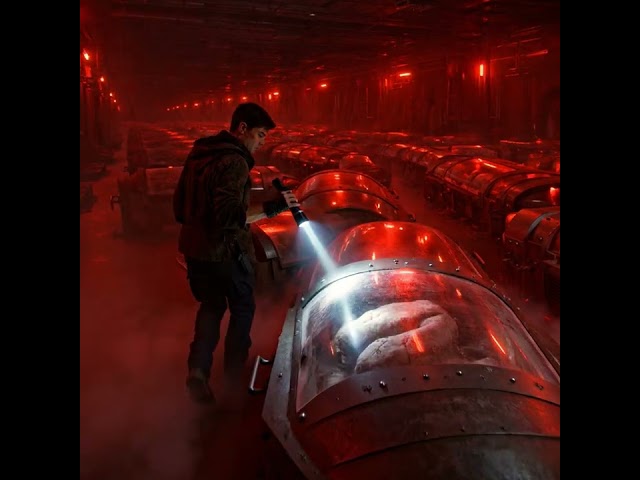
She stepped through and stopped dead. Her light caught only the nearest edge of what stretched before her—row after fucking row of preservation pods vanishing into darkness. Emergency strips leaked anemic red glow across the chamber, turning thousands of glass-fronted coffins into a bloodbath tableau. Corporate efficiency in perfect grid formation.
What I want to break down here isn’t just the imagery. It’s the mechanics underneath it, the decisions that turn a simple reveal into something that lingers.
The Door Is the First Warning
Before the reader sees anything, the scene tells them how to feel.
“The doors gave up with a grudging metallic shriek.”
That phrasing matters. The door isn’t opening. It’s resisting. It’s giving up. It frames the environment as something with friction, almost with intent. Not alive—but not neutral either.
This is one of the simplest tools for building dread: make the environment behave like it doesn’t want the character there.
If a space welcomes the character, the reader relaxes. If it resists, the reader leans forward.
The door is doing narrative work before the chamber is even visible.
Temperature as Immediate Impact
The next beat isn’t visual—it’s physical.
“A wall of cold hit Gordon’s face.”
Cold is one of the fastest ways to bypass intellectual processing and go straight to instinct. You don’t think about cold. You react to it.
Pairing that with “chemical notes” grounds the sensation in something specific. It’s not abstract atmosphere. It’s recognizable. The kind of smell that carries meaning.
“Any salvage rat recognized as long-term human storage.”
That line does two things at once. It builds the world—this is normal enough to be known—and it translates the sensory input instantly for the reader. No pause. No decoding required.
Then the line that defines the system:
“Expensive death on layaway.”
That’s not description. That’s interpretation.
And it tells you everything.
This is a world where death is planned, priced, and preserved. Where human bodies are inventory. Where systems exist not just to manage life, but to manage what comes after.
You don’t need a paragraph of explanation when a single line carries the weight.
Delay the Full Reveal
When Gordon steps inside, I don’t show the entire chamber.
“Her light caught only the nearest edge…”
Limiting visibility is critical. If the reader sees everything at once, the moment flattens. By constraining the field of view, you force the imagination to extend beyond what’s described.
“Row after fucking row… vanishing into darkness.”
That phrase is doing heavy lifting. It communicates scale without defining it. The mind fills in the rest—and what the mind creates is usually worse than anything you could precisely describe.
This is where implication becomes more powerful than detail.
Language as Character Response
Gordon’s reaction isn’t clinical. It isn’t detached.
It’s blunt.
“Stopped dead.”
“Row after fucking row.”
That language matters because it anchors the scene in a human response. The profanity isn’t there for style—it’s there because the character is trying to process something overwhelming and failing to do it cleanly.
In moments of shock, people don’t become poetic.
They become direct.
That directness keeps the scene grounded, even as the scale expands.
Light, Color, and Emotional Framing
The chamber isn’t just dark, it’s lit badly.
“Emergency strips leaked anemic red glow…”
The word “leaked” implies weakness. Failure. This isn’t a system operating at full capacity. It’s degraded. Barely holding.
And the color choice matters. Red reframes everything it touches.
“Glass-fronted coffins.”
“Bloodbath tableau.”
The objects themselves haven’t changed—but the light alters how we interpret them.
Lighting is one of the most underused tools in writing. It doesn’t just show the scene. It defines how the reader feels about what they’re seeing.
Unfortunately the AI I'm using to create a video of this scene misses the mark as video, television, and movies often do but here is the general visualization.

Order vs. Chaos
The final line is the one that locks the scene into the larger theme:
“Corporate efficiency in perfect grid formation.”
This is the pivot.
Because chaos is easy to dismiss. Chaos is something we expect from disaster.
Order is different.
Order implies intention. Design. Approval.
Nothing here is accidental. Every pod is placed with precision. Every body accounted for. This isn’t a tragedy—it’s a system functioning exactly as intended.
That’s where the real horror sits.
Not in what happened.
But in the fact that it was built.
Why This Kind of Scene Matters
Science fiction can go wide—politics, technology, scale—but I’m always looking for moments where everything collapses down into something immediate and personal.
A room. A door. A reaction.
Because that’s where the reader connects.
The preservation chamber isn’t just a set piece. It’s a statement about control, about systems that reduce people to manageable units, about what happens when efficiency becomes the highest value.
And most importantly, it’s a moment the character wasn’t meant to witness.
Those are the scenes I chase.
The ones where the air feels wrong.
The ones where the environment tells the story before anyone speaks.
I’m building more of this world in The Last Orbit, with the full release coming soon.
If you want to step into it early, you can start with the free prequel:
The Exodus Deception
https://books.plot-studios.com/the-exodus-deception